
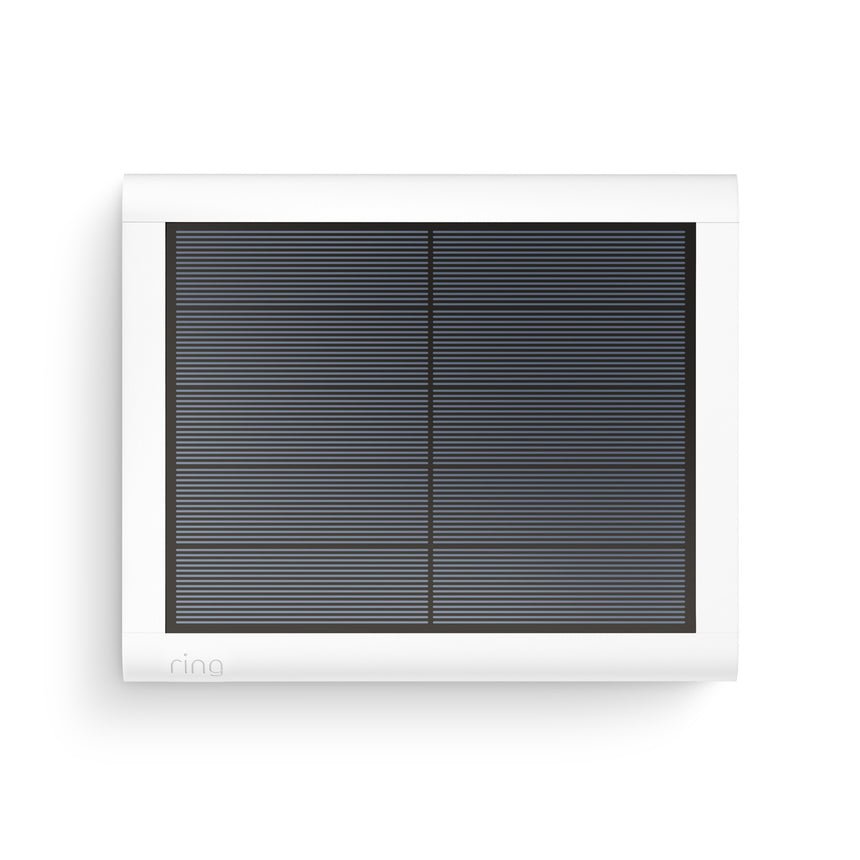
Compatibility note: Ring sells multiple solar accessories with different connectors and device lists. This review refers to the Solar Panel 2nd Generation, including the 4W USB-C version. Check the exact model and Ring’s live compatibility list for your camera before purchasing.
The Ring Solar Panel (2nd Generation) is designed to help compatible battery-powered Ring cameras stay charged with sunlight. It is not a universal solar charger for every Ring doorbell or camera. Connector type, power rating and device generation determine whether it will work with a particular product.
Explore our Recommended Products →
What does the second-generation panel do?
Ring’s compatibility documentation identifies a Solar Panel 2nd Generation, including a 4W USB-C version with a barrel-plug adapter, in its camera accessory ecosystem. The panel is intended to provide supplemental solar power to supported devices. It does not turn a wired-only camera or an incompatible doorbell into a solar-powered device.
Check compatibility before ordering
Ring’s official compatibility list names supported camera families for the Solar Panel 2nd Generation and lists different accessories for different doorbell generations. Some battery doorbells use dedicated solar chargers with particular connectors, while camera panels may use USB-C or barrel connectors. Do not rely on a product title or a generic “works with Ring” claim: identify your exact device in the Ring app and match it to the current compatibility table.
Installation and sunlight
A solar panel works best when mounted where it receives direct sunlight for much of the day. The ideal position may be different from the ideal camera position, so check cable reach and the available mounting accessories. Avoid locations shaded by rooflines, trees or neighboring buildings. Keep the panel surface clean and follow Ring’s instructions for mounting and weather exposure.
Pros and cons
Pros
- Can reduce manual charging for compatible battery-powered cameras.
- Solar power can be useful where a camera is mounted in a sunny location.
- Ring’s mounting ecosystem offers options for walls, poles and other surfaces, depending on the accessory.
Cons
- Compatibility is model- and connector-specific.
- Solar charging depends on sunlight and camera activity.
- Shaded mounting positions may provide little benefit.
- It is not a universal charger for all Ring video doorbells.
Will it keep the camera at 100%?
Do not assume that solar input guarantees a permanently full battery. Charging performance depends on available sunlight, panel orientation, temperature, battery condition and how frequently the camera records or streams video. Treat the panel as a way to reduce charging frequency, not as a guarantee that manual charging will never be needed.
Who should consider it?
It is worth considering for owners of a compatible Ring battery camera who have a sunny mounting location and want less hands-on charging. If you own a Ring doorbell, verify the exact model and the dedicated accessory recommended for it. If the camera sits under a deep eave or in a shaded alley, a solar panel may not solve the charging problem.
Verdict
The Ring Solar Panel 2nd Gen can be a convenient accessory when paired with the right camera and mounted in good sunlight. Compatibility is the first buying decision; panel placement is the second. Confirm both before spending money, and use Ring’s official compatibility list rather than assuming every second-generation panel fits every Ring product.
Official reference: Ring device and solar accessory compatibility list.