
When you start comparing solar panels, product pages quickly fill with terms like monocrystalline, polycrystalline and thin-film. They describe how the solar cells are made, and that affects how much power a panel produces from a given space, how it looks and where it works best.
Here is a simple explanation for families, whether you are thinking about a rooftop system or a small portable panel for a power station.
Quick answer: In monocrystalline vs polycrystalline solar panels, monocrystalline is the better choice for most homes: it is more efficient, needs less space and now costs about the same. Polycrystalline is mostly a budget or older option, and thin-film suits light, flexible uses such as RVs.
Key takeaways: monocrystalline vs polycrystalline
- In monocrystalline vs polycrystalline efficiency, monocrystalline panels usually come out ahead.
- Monocrystalline vs polycrystalline prices are now close, so most new home systems use monocrystalline.
- You can tell monocrystalline vs polycrystalline apart by color: black and uniform versus blue and speckled.
- Thin-film panels are a third option, best for light or curved surfaces such as RV roofs.
Monocrystalline panels
Monocrystalline cells are cut from a single, pure silicon crystal. They usually look uniformly dark or black.
- Efficiency: the highest of the common types. Many residential panels today convert roughly 20–23% of sunlight into electricity, and some premium models go a little higher.
- Space: more power from a smaller area, which helps on small or partly shaded roofs.
- Market: they now make up the large majority of panels sold for homes, so they are easy to find at competitive prices.
Most portable folding panels sold with power stations also use monocrystalline cells.
Polycrystalline panels
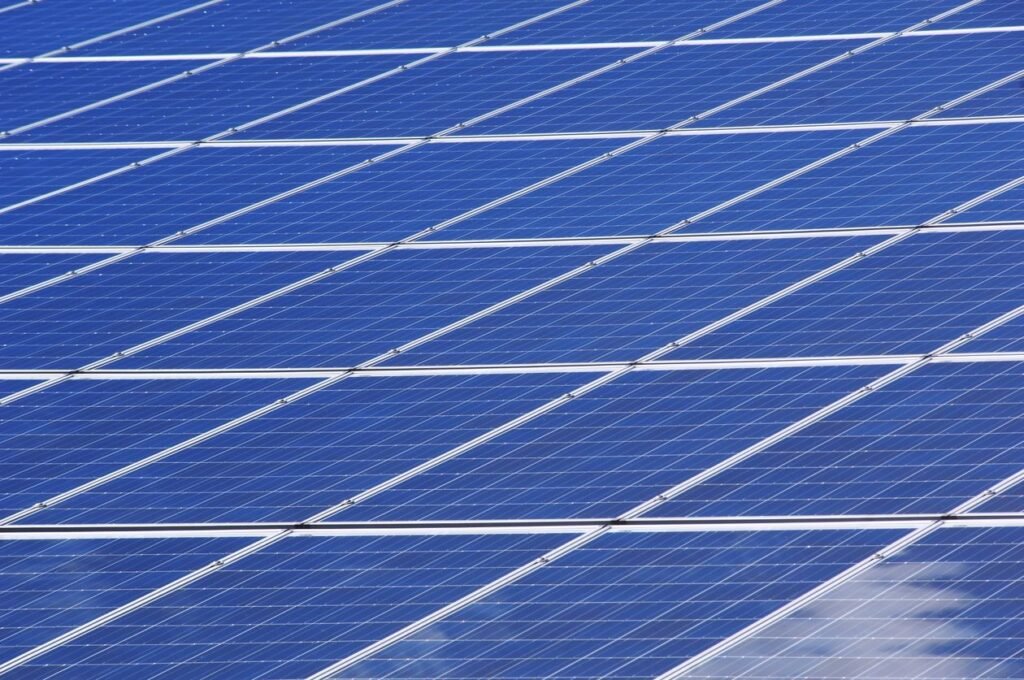
Polycrystalline cells are made from many silicon fragments melted together. They often look blue with a speckled, “shattered glass” pattern.
- Efficiency: typically lower than monocrystalline, often in the mid-to-high teens.
- Cost: historically cheaper, but the price gap has largely disappeared as monocrystalline production scaled up.
- Market: much less common for new home installations today. You may still see them on older roofs or as budget used panels.
Thin-film panels
Thin-film panels use very thin layers of light-absorbing material on glass, metal or flexible plastic. There are several thin-film technologies, and they perform quite differently.
- Flexible thin-film panels are light and can bend to fit curved surfaces, such as RV or boat roofs. Many have lower efficiency, so you need more area for the same power.
- Utility-scale thin-film (used in large solar farms) can be quite efficient, but it is rarely sold for small home rooftops.
- Some thin-film products handle heat and partial shade a little better, but they may degrade faster depending on the technology and quality.
Side-by-side comparison
| Monocrystalline | Polycrystalline | Thin-film (flexible) | |
|---|---|---|---|
| Typical look | Black, uniform | Blue, speckled | Dark, very thin |
| Efficiency | Highest | Medium | Usually lowest |
| Space needed | Least | More | Most |
| Weight | Standard | Standard | Very light |
| Best for | Most homes and portable kits | Budget or used setups | RVs, boats, curved surfaces |
Newer terms you might see
Modern monocrystalline panels often add features with their own names:
- Half-cut cells: cells cut in half to reduce losses and improve shade tolerance.
- PERC, TOPCon or heterojunction (HJT): cell designs that squeeze out more efficiency.
- Bifacial: panels that collect light on both sides, useful on ground mounts over light-colored surfaces.
You do not need to master these. Just know they are improvements on the monocrystalline idea, not completely different categories.
Which type should your family choose?
- Rooftop system: monocrystalline is the default choice for most homes today.
- Portable panel for a power station: a folding monocrystalline panel gives the best power for its size.
- Camper van or boat: flexible thin-film or flexible monocrystalline panels can make sense where weight and shape matter.
- Tight budget: used polycrystalline panels can work for DIY projects, but check their condition and real output.
Efficiency is not the only thing that matters
A slightly less efficient panel from a reputable maker with a strong warranty can be a better buy than a “record-breaking” panel from an unknown brand. Also compare:
- Product warranty and performance warranty (how much output is guaranteed after 25 years or so)
- Temperature coefficient (how much power drops in heat)
- Certifications for your country
- Installer experience and local support
Before you buy anything, our seven-point home energy product checklist helps you avoid common mistakes.
Monocrystalline vs polycrystalline: frequently asked questions
Is monocrystalline better than polycrystalline?
For most homes, yes. Monocrystalline panels are more efficient, so they produce more power from the same roof space, and the price gap has largely disappeared. Polycrystalline panels still work, but they are now mostly found on older roofs or as budget used panels.
How can I tell the two types apart?
Monocrystalline panels usually look uniformly dark or black. Polycrystalline panels tend to look blue with a speckled pattern, a bit like shattered glass. The spec sheet will also name the cell type.
Are thin-film panels a good choice for a house?
Usually not for a standard rooftop. Flexible thin-film panels are light and bend to fit curved surfaces, which suits RVs and boats, but many have lower efficiency, so you need more area for the same power.
Which panel type is best for a portable power station?
A folding monocrystalline panel gives the most power for its size and weight. Just check that its voltage and connector match your station’s solar input.
Related guides on KHAMOVA
- How Shade Affects Solar Panels
- Solar Panel Direction and Tilt Angle Guide
- What Size Solar Panel Do You Need to Recharge a Power Station?
The bottom line
For most families, monocrystalline panels offer the best mix of efficiency, availability and value. Polycrystalline is mostly a budget or legacy option, and thin-film shines in special uses where weight and flexibility matter more than space.