
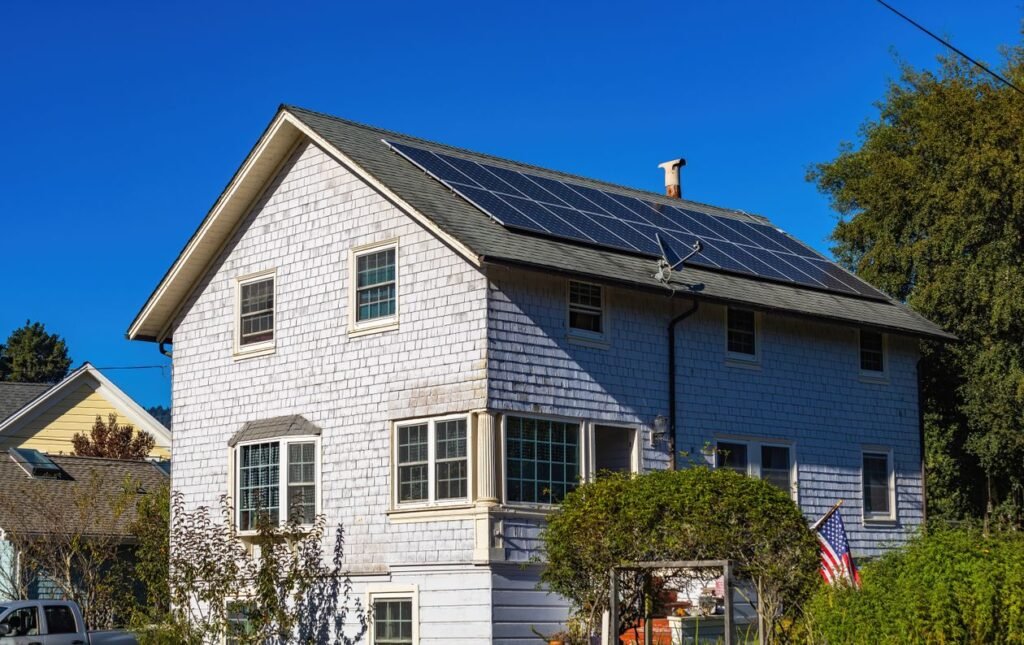
Two identical solar panels can produce very different amounts of electricity depending on which way they face and how steeply they are tilted. The good news is that you do not need perfect angles to get good results. Understanding a few simple rules helps you judge a roof, compare installer quotes, and set up portable panels correctly.
Quick answer: The best solar panel tilt angle for year-round output on a fixed mount is roughly equal to your latitude, facing south in the northern hemisphere (north in the southern hemisphere). Most pitched roofs are close enough, and east or west roofs still work well.
Key takeaways: solar panel tilt angle
- A solar panel tilt angle close to your latitude gives the best year-round output on a fixed mount.
- A lower solar panel tilt angle favors summer, and a steeper one favors winter and snow shedding.
- Most pitched roofs already give a workable solar panel tilt angle without extra racks.
- For portable panels, adjust the solar panel tilt angle by hand every one to two hours.
Rule 1: Face the sun’s path
The sun rises in the east, sets in the west, and travels across the southern sky if you live in the northern hemisphere (or the northern sky in the southern hemisphere).
- Northern hemisphere (USA, Canada, Europe, Morocco and most of Asia): panels facing south usually produce the most energy over a year.
- Southern hemisphere (Australia, South Africa, much of South America): panels facing north usually produce the most.
East and west roofs can still be worth it
Many families do not have a perfect south-facing roof. That is fine. East- or west-facing panels often produce somewhat less in total than an ideal south-facing array, but the difference is often smaller than people expect, and it can even suit your schedule:
- East-facing panels produce more in the morning.
- West-facing panels produce more in the late afternoon and early evening, when many families come home and start cooking, and when some utilities charge higher rates.
Panels facing directly away from the sun’s path (north-facing in the northern hemisphere) usually perform poorly unless the roof is very flat.
Rule 2: Tilt matters, but less than you think
Tilt is the angle between the panel and the ground. A flat panel is 0°; a panel standing straight up is 90°.
- A common rule of thumb for fixed panels is a tilt close to your latitude for the best year-round production.
- A lower tilt favors summer, when the sun is high.
- A steeper tilt favors winter, when the sun is low, and helps snow slide off.
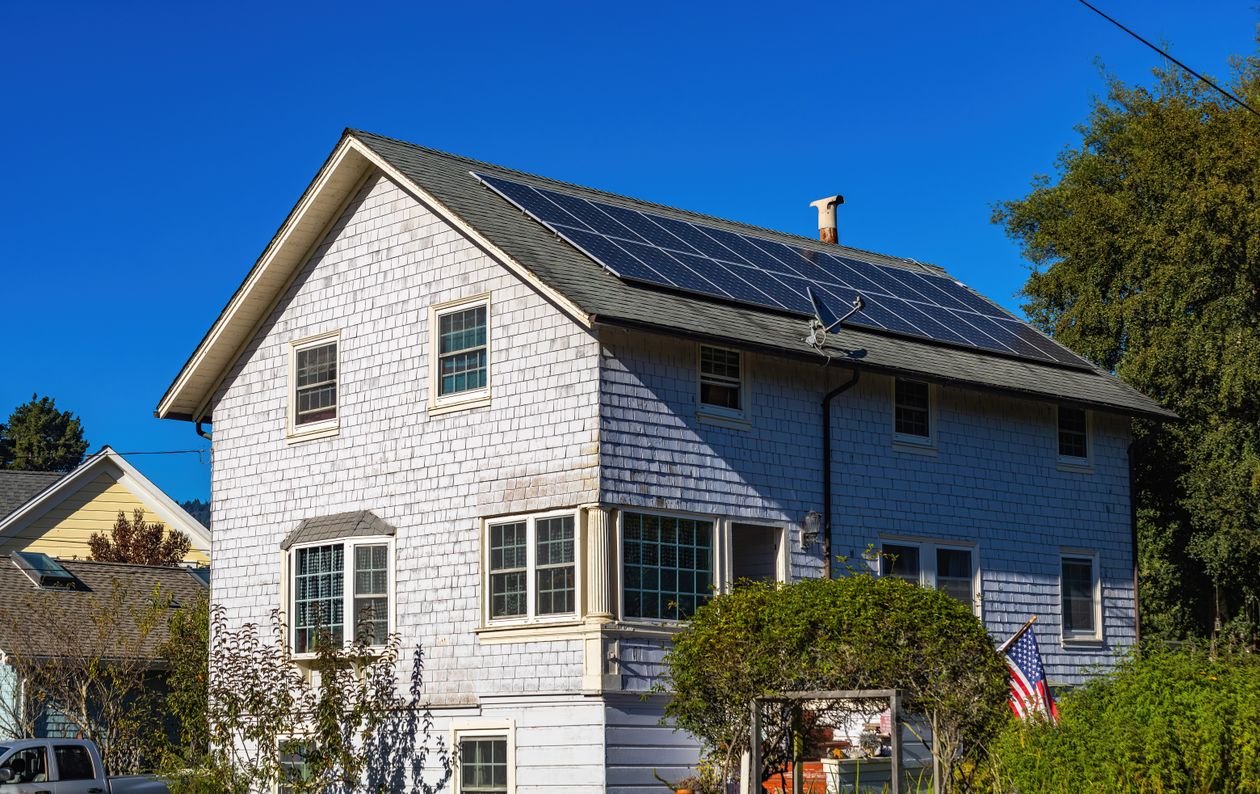
Most pitched roofs fall within a range that works well, so installers usually mount panels flat against the roof rather than adding angled racks. The small gain from a “perfect” angle often is not worth extra cost, wind load or roof penetrations.
Flat roofs and ground mounts
On flat roofs or in the garden, panels are placed on tilted racks. Here you can choose the angle. Keep in mind:
- Rows must be spaced so one row does not shade the next, especially in winter.
- Very low angles collect more dust because rain washes them less effectively.
- Racks must be secured for wind, so follow local building rules.
Estimate production for your own address
You do not need to guess. Free tools let you enter your address, panel direction and tilt to estimate yearly production. One well-known option is PVWatts, a calculator from the U.S. National Renewable Energy Laboratory (NREL). Try a few directions and tilts to see how much each one really changes the result for your location. Compare that with installer quotes; big differences deserve a question.
Portable panels: angle them by hand
With a folding panel and power station, direction and tilt are entirely in your hands, and small adjustments make a big difference.
- Point the panel toward the sun so its shadow falls straight behind it.
- Use the kickstand to tilt it so the sun hits the surface as directly as possible.
- Re-aim every one to two hours as the sun moves.
- Watch the input watts on your power station’s display while you adjust; aim for the highest reading.
- Avoid shade from walls, trees and vehicles.
If you are still choosing a panel, our guide to choosing a solar panel size for your power station explains what to look for.
Questions to ask your installer
- Which roof faces will you use, and why?
- What tilt and direction did you use in the production estimate?
- How much production would we lose by using the east or west roof instead?
- Will the angle cause any snow, wind or shading issues?
Solar panel tilt angle: frequently asked questions
What is the best tilt angle for solar panels?
For a fixed mount, a tilt close to your latitude gives the best year-round production. A lower angle favors summer, and a steeper angle favors winter and helps snow slide off.
Which direction should solar panels face?
South in the northern hemisphere and north in the southern hemisphere usually produce the most energy over a year. East- and west-facing panels produce a little less, but they can match morning or evening use well.
Do I need special racks to tilt panels on my roof?
Usually not. Most pitched roofs already give a workable angle, so installers mount panels flat against the roof. Tilted racks are mainly used on flat roofs and ground mounts.
How do I angle a portable solar panel?
Point it toward the sun so its shadow falls straight behind it, use the kickstand to face the sun directly, and re-aim it every one to two hours. Watch the input watts on your power station while you adjust.
Related guides on KHAMOVA
- How Shade Affects Solar Panels
- How to Calculate Your Solar Payback Period
- How Does Solar Energy Work at Home?
The bottom line
Facing panels toward the sun’s path and using a reasonable tilt is enough for most homes. South-facing (or north-facing in the southern hemisphere) is ideal, but east and west roofs can still deliver good value. For portable panels, re-aiming by hand every couple of hours is one of the easiest ways to charge faster.