
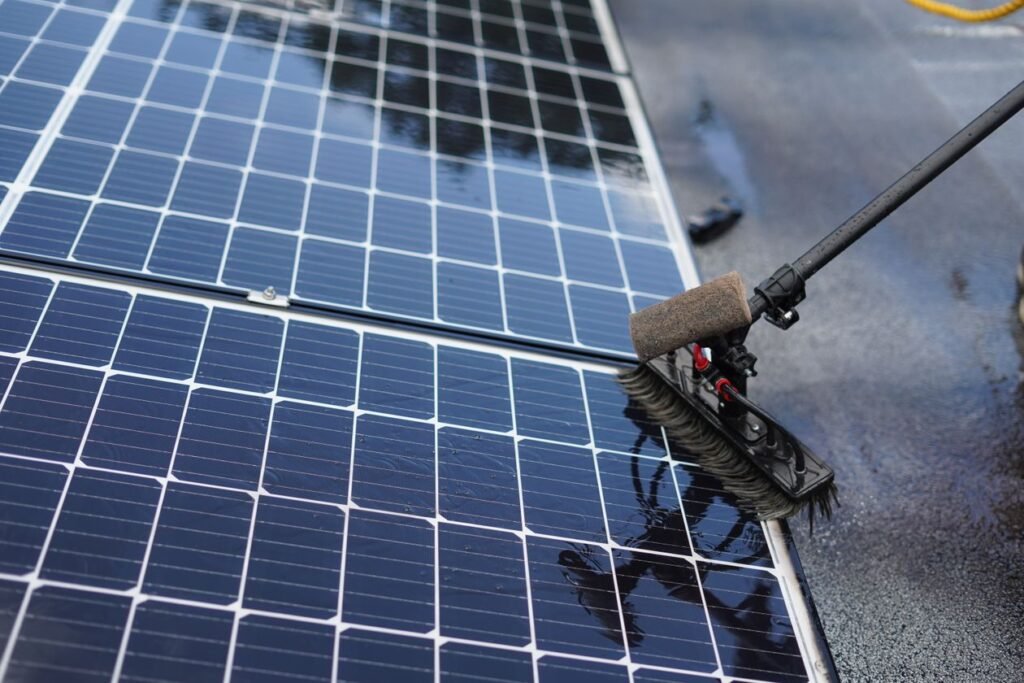
Solar panels sit outside all year, so dust, pollen, leaves and bird droppings inevitably build up. In many places, rain keeps panels clean enough. In dry, dusty or polluted areas, or near farms and trees, dirt can noticeably reduce output.
The good news is that cleaning is simple. The bad news is that the wrong method can scratch the glass, damage seals, void your warranty or, worst of all, cause a dangerous fall. Here is how to do it safely.
Quick answer: To clean solar panels safely, stay on the ground, use a soft brush on an extension pole with plain or soft water, and clean in the cool early morning or evening. Avoid pressure washers, abrasive pads and harsh chemicals, and hire a professional for high or steep roofs.
Key takeaways: how to clean solar panels
- Clean solar panels only when output drops or dirt is visible; rain often does the job.
- To clean solar panels safely, stay on the ground and use a soft brush on an extension pole.
- Clean solar panels in the cool early morning or evening with soft or deionized water.
- Never use a pressure washer, abrasive pads or strong chemicals on the glass.
Do your panels actually need cleaning?
Before you grab a bucket, check whether cleaning will make a difference:
- Look at your monitoring app. Compare output on clear days with similar days a few weeks or months earlier. A gradual drop without any change in weather may point to dirt.
- Look at the panels from the ground (binoculars help). Bird droppings and leaf piles block light much more than a thin layer of dust.
- Consider your climate. Regular rain usually means occasional cleaning at most. Long dry seasons, desert dust or nearby construction may justify cleaning a few times a year.
Step 1: Read the manual and warranty first
Panel manufacturers often specify which cleaning methods are allowed. Some warranties can be affected by high-pressure washing or harsh chemicals. A two-minute check can save you an expensive mistake.
Step 2: Put safety first
Roofs are slippery, especially when wet, and falls are a serious risk.
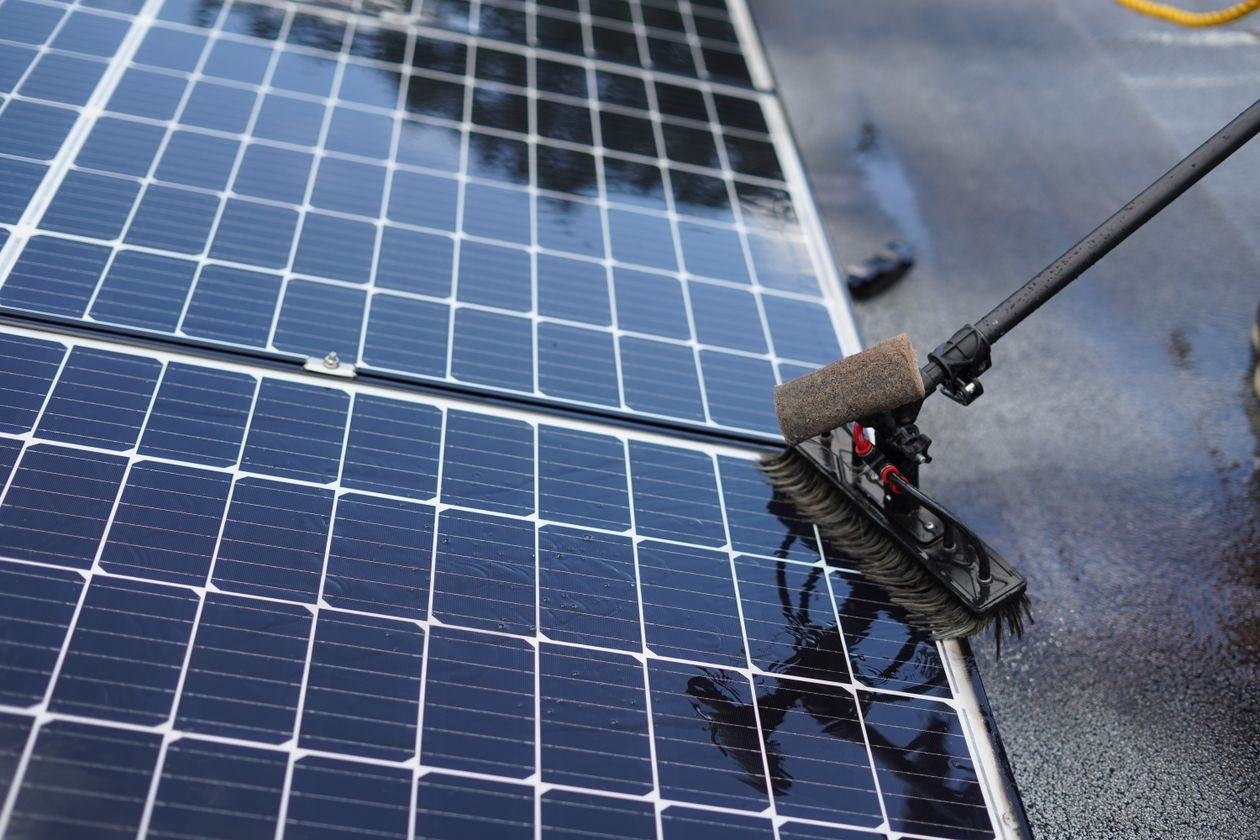
- Clean from the ground with a long, soft brush on an extension pole whenever possible.
- Do not walk on panels. It can crack cells you cannot see.
- Hire a professional for steep, high or hard-to-reach roofs. Many solar companies offer cleaning and inspection.
- Follow your system’s instructions for switching off before any hands-on work, and never touch damaged panels or exposed wiring.
Step 3: Choose the right time
Clean in the early morning or evening, or on a cloudy day. Panels get very hot in the afternoon sun. Spraying cold water on hot glass can stress it, and water evaporates quickly, leaving streaks and mineral spots.
Step 4: Use gentle tools
Use:
- A soft brush or squeegee with a soft rubber edge
- Plain water, ideally soft or deionized water to avoid mineral spots
- A small amount of mild soap only if the manual allows it, rinsed off well
- A garden hose with gentle pressure
Avoid:
- Pressure washers on high settings
- Abrasive sponges, scouring pads or metal tools
- Strong chemicals, solvents or glass cleaners with ammonia
- Scraping off bird droppings when dry; soak them first, then brush gently
Step 5: Check the results
After cleaning, compare production on the next clear day. If output barely changed, dirt was not the problem, and you may want to check for shade, a faulty panel or an inverter issue instead. Our guide on how shade affects solar panels can help you spot other causes.
What about snow?
Snow usually slides off tilted panels on its own once the sun comes out. If you want to speed it up, a soft foam roof rake used from the ground can help, but never climb onto a snowy roof and never use metal shovels or hot water.
Portable panels are easier
If you use a folding panel with a power station, simply wipe it with a soft damp cloth after trips, let it dry before folding, and store it away from sharp objects. Check the connector for dirt or corrosion too.
How often should you clean?
| Situation | Typical approach |
|---|---|
| Regular rainfall, few trees | Inspect once or twice a year; clean only if needed |
| Dry, dusty or desert climate | Inspect every few months; clean when output drops |
| Near farms, trees or heavy bird activity | Inspect seasonally; remove droppings and leaves promptly |
| Low-tilt or flat panels | Check more often, as rain clears them less well |
How to clean solar panels: frequently asked questions
How often should solar panels be cleaned?
In places with regular rain, inspecting once or twice a year and cleaning only when needed is usually enough. In dry, dusty areas, near farms or under trees, you may need to check every few months.
Can I use a pressure washer on solar panels?
Avoid it. High pressure can damage seals and may affect your warranty. A soft brush and a garden hose on gentle pressure are safer for the glass and frame.
What is the best water for cleaning solar panels?
Soft or deionized water leaves fewer mineral spots than hard tap water. Use a mild soap only if the panel manual allows it, and rinse it off well.
Does cleaning solar panels really increase output?
It can when panels are visibly dirty, especially with bird droppings or leaves. Compare output on a clear day before and after cleaning. If nothing changes, look for shade, a faulty panel or an inverter problem instead.
Related guides on KHAMOVA
The bottom line
Clean solar panels only when they need it, use soft tools and plain water, work in the cool part of the day, and keep your feet on the ground. When in doubt, a professional cleaning and inspection is cheaper than a fall or a cracked panel.