11 Amazing Alternative Energy Resources That Could Power the Future
Why Alternative Energy Resources Matter More Than Ever
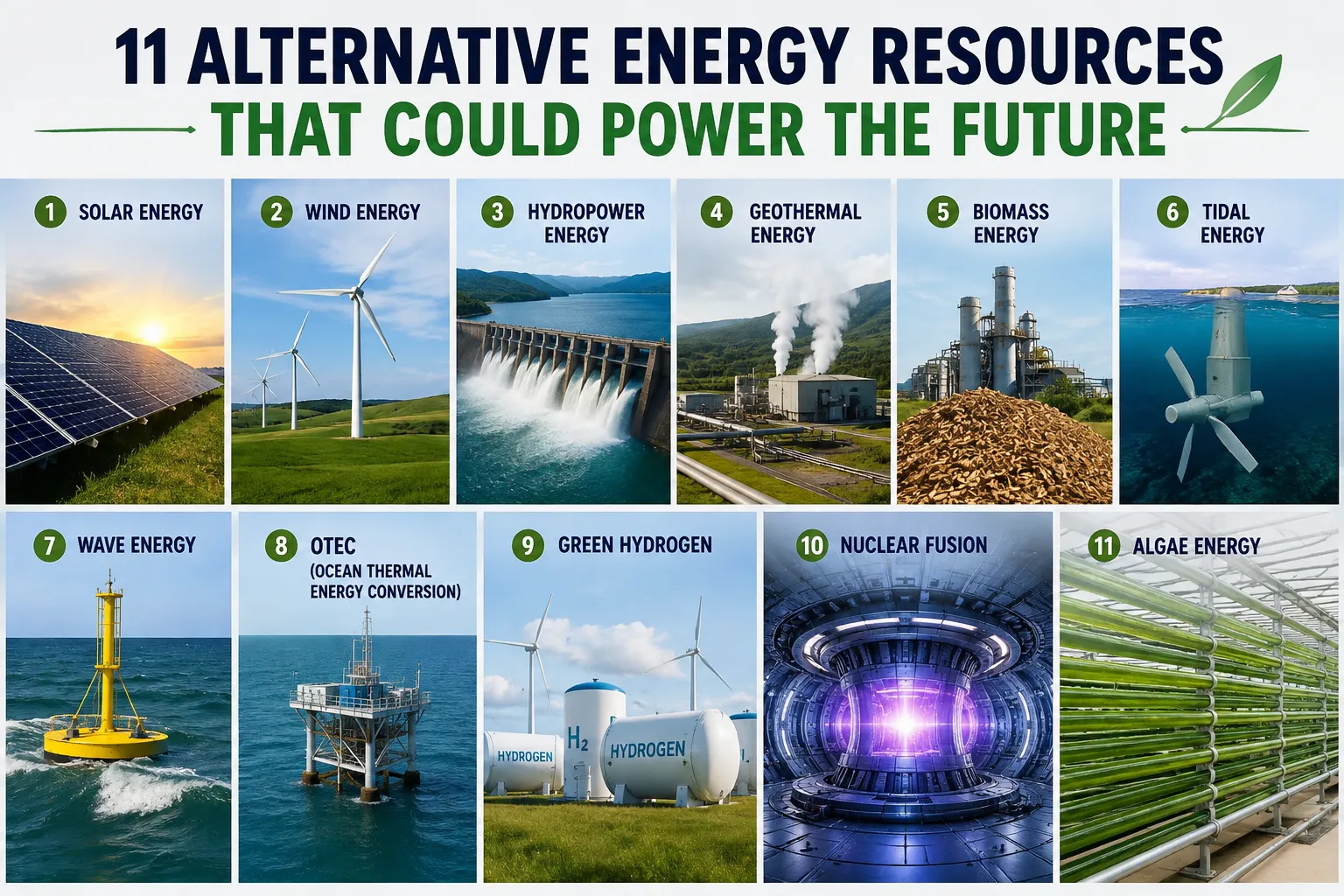
The global energy system is changing faster than many people realize, and alternative energy resources are moving from the margins of the energy industry toward the center of the conversation. For decades, modern economies relied heavily on coal, oil, and natural gas because these fuels were relatively easy to store, transport, and use whenever electricity or heat was needed. Today, however, concerns about climate change, air pollution, fuel-price volatility, energy security, and aging infrastructure are encouraging governments, businesses, and households to look for cleaner ways to produce and use energy. The momentum is visible in the latest numbers: IRENA reports that global renewable power capacity reached 5,149 GW at the end of 2025, after the world added 692 GW of renewable capacity during the year. The IEA also reports that global annual renewable capacity additions reached about 800 GW in 2025, with solar PV accounting for more than three-quarters of new renewable capacity. These figures show that alternative energy resources are no longer simply experimental ideas waiting for the future; many are already being deployed at enormous scale. The exciting part is that the energy transition is not dependent on a single technology. Instead, the future could be built from a diverse portfolio of alternative energy resources, with each source contributing something different to a more flexible, resilient, and potentially cleaner energy system.
The Shift Away From Fossil Fuels
The most important reason to explore alternative energy resources is that no single energy source can perfectly satisfy every need. Solar panels produce electricity brilliantly during sunny periods, but they do not generate power from sunlight at night. Wind turbines can produce enormous amounts of electricity, yet wind conditions change from hour to hour and season to season. Hydropower can provide flexibility and energy storage in some regions, while geothermal resources can deliver steady output in locations with suitable underground heat. Biomass can turn organic materials into useful energy, while emerging marine technologies can capture energy from moving water. Green hydrogen can potentially connect renewable electricity with industrial processes, transportation, and long-duration energy storage. In other words, alternative energy resources are less like individual competitors and more like instruments in an orchestra: each has a different sound, but together they can create something much more powerful. The IEA expects global renewable power capacity to increase by roughly 4,600 GW between 2025 and 2030 in its main forecast, with solar PV providing almost 80% of that growth, while wind, hydropower, bioenergy, and geothermal energy also contribute. That diversification matters because a modern energy system needs electricity, heat, fuels, storage, and flexibility rather than simply more power plants.
1. Solar Energy
Solar energy is arguably the most recognizable of today’s alternative energy resources, and its rapid expansion is one of the clearest signs that the energy landscape is changing. Solar photovoltaic panels convert sunlight directly into electricity, while solar thermal systems can capture the sun’s heat for water heating, industrial applications, or electricity generation. One reason solar power has become so attractive is its flexibility: a small rooftop system can supply electricity to a household, while enormous utility-scale solar farms can provide power to entire regions. Solar can also be installed in places where conventional power infrastructure is difficult or expensive to build, including remote communities and isolated facilities. According to IRENA, solar accounted for approximately 511 GW of renewable capacity additions in 2025, representing roughly three-quarters of all renewable additions that year. The IEA says solar PV additions surpassed 600 GW in 2025, bringing global cumulative solar PV capacity to around 2,800 GW. These statistics explain why solar energy is likely to remain one of the dominant alternative energy resources for decades. The technology is also becoming increasingly integrated with batteries, smart energy management, electric vehicles, and flexible electricity grids, allowing solar-generated electricity to become part of a much broader energy ecosystem.
How Solar Power Works
At its simplest, solar photovoltaic technology works by using semiconductor materials to convert sunlight into electrical energy. When photons from sunlight interact with the solar cell, they help generate an electrical current that can be converted into usable electricity for homes, businesses, or the grid. Modern solar systems can be paired with batteries, allowing electricity generated during daylight hours to be stored for later use. This combination is particularly interesting because one of the traditional weaknesses of solar—the difference between daytime production and nighttime demand—can be reduced with energy storage. Solar is also increasingly being used in creative ways, including floating solar installations, agrivoltaics, building-integrated photovoltaics, and solar canopies over parking areas. These approaches demonstrate why alternative energy resources should not be viewed as one-size-fits-all technologies. Instead, they can be adapted to different environments and energy needs. The IEA expects solar PV to dominate renewable capacity growth through 2030, driven by falling costs, relatively fast deployment, and broad acceptance. For homeowners, solar can potentially reduce dependence on grid electricity; for businesses, it can provide a way to manage long-term electricity costs; and for utilities, large solar projects can add significant generation capacity without the fuel requirements associated with fossil-fuel plants.
Why Solar Could Lead the Energy Transition
Solar power has a remarkable advantage: the resource is widespread. Sunlight reaches almost every part of the planet, although its intensity varies considerably by geography and weather conditions. This means that alternative energy resources based on solar power can be developed in deserts, cities, rural communities, industrial sites, and even offshore environments. Solar systems can also be scaled gradually, allowing energy users to start small and expand over time. A homeowner might begin with rooftop panels and later add a battery or electric vehicle, while a utility could expand a solar farm in stages as demand increases. There are still challenges, including intermittency, land requirements for large projects, recycling and material supply chains, transmission constraints, and the need for storage or flexible generation. Yet technological improvements continue to address some of these obstacles. The rapid growth seen in 2025 demonstrates the commercial strength of solar: IRENA recorded more than 510 GW of solar power additions in that year alone. Among all alternative energy resources, solar therefore stands out not simply because it is renewable, but because it can be deployed almost anywhere and at almost any scale.
2. Wind Energy
Wind energy is another major category of alternative energy resources with a long history of development and an increasingly important role in modern electricity systems. Wind turbines use moving air to rotate blades connected to a generator, converting the kinetic energy of wind into electricity. Onshore wind farms are already common in many countries, while offshore wind projects can take advantage of stronger and more consistent winds over oceans and large bodies of water. The scale of modern turbines is impressive, with some offshore machines reaching enormous heights and generating many megawatts from a single unit. Wind power is particularly valuable because its production profile differs from solar, meaning that combining the two can create a more balanced renewable portfolio. IRENA reports that global wind capacity additions reached approximately 158.7 GW in 2025, an increase of about 14% compared with 2024. The IEA similarly estimates that global wind capacity additions reached around 160 GW in 2025, setting another record. The future of alternative energy resources will therefore likely include both solar and wind working side by side. Wind does face obstacles such as permitting, transmission, local opposition, supply-chain pressures, wildlife considerations, and project financing, but continued improvements in turbine design, forecasting, offshore engineering, and grid management could expand its contribution significantly.
3. Hydropower
Hydropower is one of the oldest large-scale alternative energy resources and remains one of the most important sources of renewable electricity worldwide. Instead of burning fuel, hydropower plants use the movement of water to turn turbines and generate electricity. Large reservoirs can also provide a valuable service that intermittent renewable sources cannot always provide on their own: the ability to store energy and release it when electricity demand rises. Pumped-storage hydropower goes even further by using electricity to move water uphill when power is plentiful and releasing it through turbines later when electricity is needed. This makes pumped storage particularly relevant to future grids with large amounts of solar and wind power. IRENA reports that renewable hydropower capacity, excluding pumped storage, increased by 18.4 GW during 2025, with China accounting for about 96% of that increase. Hydropower is not without environmental and social concerns, especially where large dams alter river ecosystems or require major land changes. Still, among alternative energy resources, hydropower has a unique combination of electricity generation, grid flexibility, and energy storage potential. Existing dams may also provide opportunities to modernize turbines and improve efficiency without constructing entirely new facilities.
4. Geothermal Energy
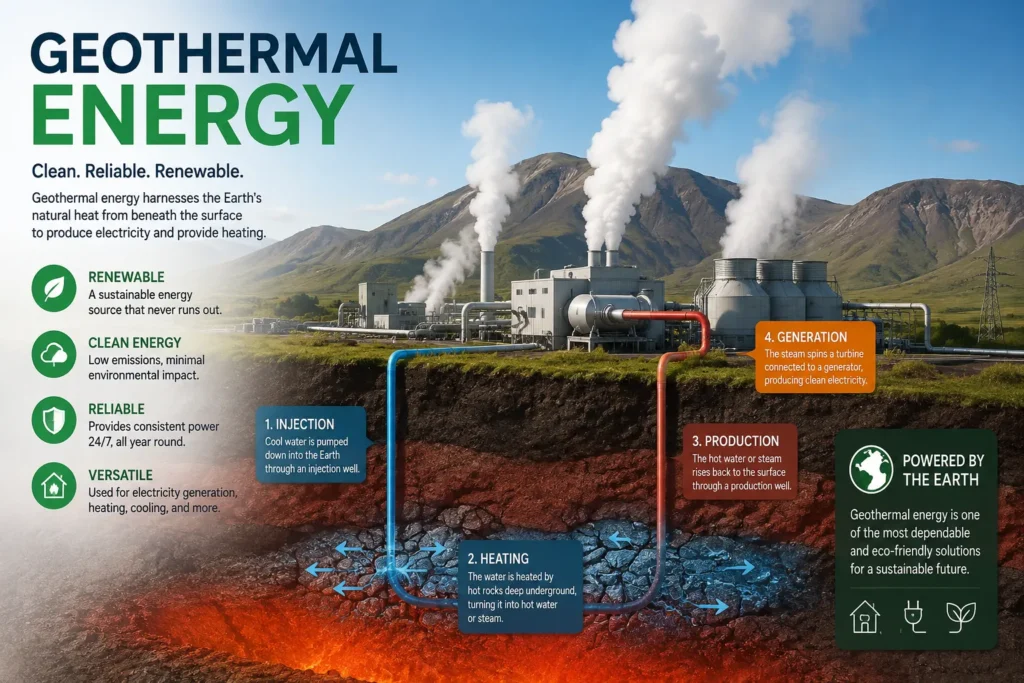
Geothermal energy draws on heat stored beneath Earth’s surface, making it one of the most fascinating alternative energy resources available today. In areas with accessible underground heat, wells can bring hot water or steam toward the surface, where it can be used to generate electricity or provide direct heating. Unlike solar and wind, geothermal power can potentially operate continuously, making it attractive for supplying dependable electricity regardless of whether the sun is shining or the wind is blowing. Traditional geothermal resources are concentrated in particular geological regions, including areas with volcanic activity and tectonic boundaries. However, enhanced geothermal systems could eventually expand the technology’s geographical reach by creating engineered pathways through hot underground rock. IRENA reports that geothermal capacity increased by about 0.3 GW in 2025, with the Philippines and Indonesia among the contributors to new capacity. The IEA expects annual geothermal additions to grow substantially toward 2030, with annual additions potentially reaching a historic high in its forecast. That makes geothermal an intriguing part of the future mix of alternative energy resources. Its biggest challenge is not the absence of heat—the Earth contains an enormous amount—but developing projects economically while managing drilling risks, geological uncertainty, water requirements, and local environmental considerations.
5. Biomass Energy
Biomass energy uses organic material as an energy source and represents another important category of alternative energy resources. Agricultural residues, forestry materials, organic waste, landfill gas, and other biological materials can be converted into heat, electricity, biogas, or liquid fuels. The appeal of biomass comes partly from its ability to turn materials that might otherwise be discarded into useful energy. A farm could use agricultural residues for heat, a wastewater facility could capture biogas, and a landfill could collect methane for energy production. Biomass is also different from solar and wind because it can be stored and used when needed, giving it some characteristics of conventional fuels while potentially reducing waste. However, calling every biomass project automatically sustainable would be misleading. The environmental performance depends heavily on what material is used, where it comes from, how it is transported, and whether harvesting affects ecosystems or competes with food production. IRENA recorded a 3.4 GW increase in global bioenergy capacity in 2025. As part of a balanced group of alternative energy resources, responsibly sourced biomass could play a useful role in waste management, industrial heat, renewable fuels, and electricity generation, particularly when projects prioritize genuine waste streams and sustainable feedstocks.
6. Tidal Energy
Tidal energy is one of the more unusual alternative energy resources because it harnesses the predictable movement of ocean tides. Tides are caused primarily by gravitational interactions involving the Earth, Moon, and Sun, which means tidal patterns can be forecast with impressive accuracy. Tidal-stream systems place underwater turbines in areas where tidal currents move rapidly, allowing the flowing water to turn turbines and generate electricity. Tidal-range projects can work differently, using differences in water levels associated with tides to drive turbines. One major attraction is predictability: unlike wind and solar, tidal cycles can be calculated far into the future. That does not mean tidal power is easy to deploy. Marine environments are difficult and expensive places to install and maintain equipment, and projects must carefully consider navigation, fisheries, marine ecosystems, corrosion, underwater construction, and grid connections. Tidal technology is still much smaller than leading alternative energy resources such as solar and wind, but its predictability could make it useful in selected coastal locations. The U.S. Energy Information Administration recognizes tidal power, wave power, and ocean thermal energy conversion as distinct forms of ocean energy. If engineering costs continue to fall and environmental performance improves, tidal energy could become a specialized but valuable component of future low-carbon electricity systems.
7. Wave Energy
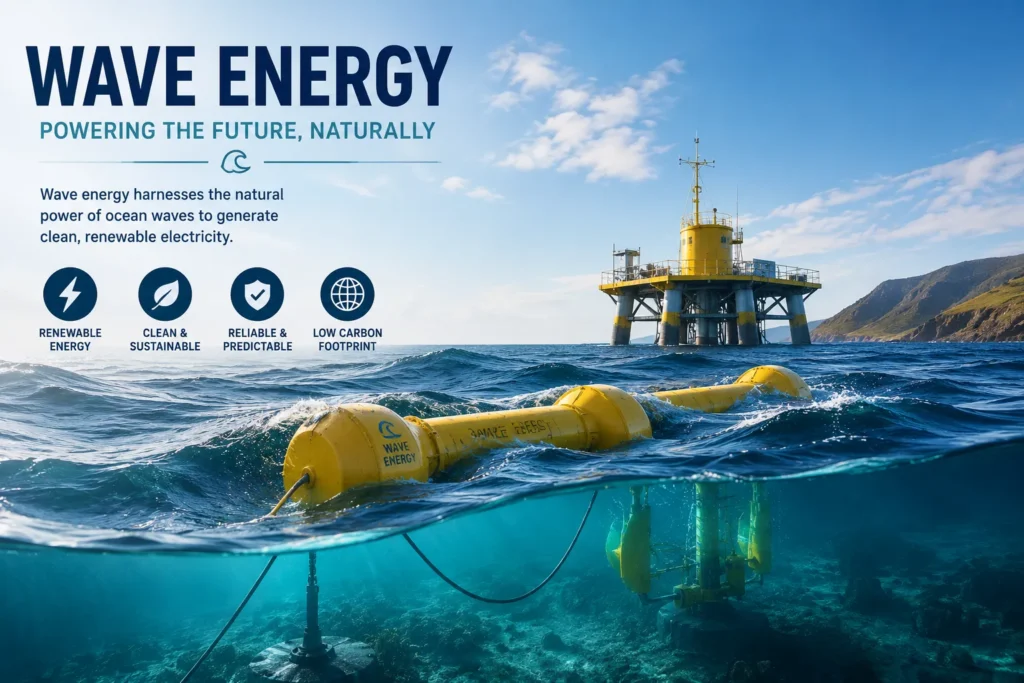
Wave energy captures the movement of ocean waves and converts that motion into electricity, giving it a place among emerging alternative energy resources. Unlike tidal systems, which focus on predictable tidal currents or water-level changes, wave technologies generally capture the up-and-down or back-and-forth motion created as waves travel across the ocean. Engineers have developed numerous concepts, including floating devices, oscillating water columns, point absorbers, and other mechanical systems. The theoretical resource is enormous because oceans cover most of Earth’s surface, but turning that resource into reliable, affordable electricity is extremely difficult. Ocean waves are powerful, unpredictable in individual events, and capable of damaging equipment that must survive storms and harsh saltwater environments. Maintenance is another challenge because technicians cannot simply walk out to a remote offshore machine whenever something breaks. Nevertheless, wave power remains interesting because coastal regions could potentially combine it with other alternative energy resources, including offshore wind and floating solar. Shared offshore infrastructure could theoretically reduce some costs by allowing several technologies to use common cables, vessels, monitoring systems, or grid connections. Wave energy is unlikely to replace solar or wind on its own, but a future energy system does not need every technology to dominate; it needs different alternative energy resources to fill different gaps.
8. Ocean Thermal Energy
Ocean thermal energy conversion, commonly known as OTEC, is another fascinating member of the alternative energy resources family. It uses differences in temperature between warm surface seawater and colder deep seawater to produce useful energy. In tropical oceans, the temperature difference can be substantial enough to support specialized thermal cycles that generate electricity. Some concepts can also produce fresh water as part of the process, potentially giving the technology additional value in island or coastal regions facing water challenges. The biggest difficulty is economics: OTEC systems require large infrastructure, substantial water flows, specialized equipment, and locations with suitable temperature gradients. Moving large volumes of seawater also creates engineering and environmental questions that must be carefully studied. Compared with solar, wind, and hydropower, ocean thermal energy remains a niche technology. Still, the purpose of exploring alternative energy resources is precisely to identify a portfolio of solutions rather than betting everything on one approach. The EIA lists ocean thermal energy conversion alongside tidal and wave power as ocean-energy technologies. If future engineering breakthroughs reduce costs and improve reliability, OTEC could have particular value in tropical island communities where imported fossil fuels are expensive and electricity demand is closely connected to cooling and water production.
9. Green Hydrogen
Green hydrogen is slightly different from many alternative energy resources because hydrogen is an energy carrier rather than a primary renewable resource like sunlight or wind. Green hydrogen is generally produced by using renewable electricity to split water into hydrogen and oxygen through electrolysis. The resulting hydrogen can then be stored, transported, or used in applications that are difficult to electrify directly. Heavy industry is one important potential market because sectors such as steelmaking and chemical production require high-temperature heat or molecular feedstocks. Hydrogen could also potentially support long-duration energy storage, shipping, aviation-related fuels, and other applications where batteries may not be practical. The important point is that green hydrogen does not magically create energy; it transfers renewable electricity into a storable chemical form, with energy losses occurring during production and later conversion. That means it should be used strategically rather than everywhere. Among alternative energy resources, green hydrogen could become particularly valuable for difficult-to-decarbonize sectors. Its future depends on the cost of renewable electricity, electrolyzer technology, water availability, infrastructure, storage, transportation, and the development of reliable markets. As renewable generation expands, the possibility of producing hydrogen during periods of abundant electricity could become increasingly attractive.
10. Concentrated Solar Power
Concentrated solar power, or CSP, uses mirrors to focus sunlight and generate high-temperature heat, making it another intriguing form of alternative energy resources. Unlike conventional photovoltaic panels, which convert sunlight directly into electricity, CSP systems first concentrate solar energy as heat. That thermal energy can then drive a turbine or support other industrial processes. One major advantage is that thermal energy can potentially be stored, particularly through systems using molten salts, allowing electricity to be generated after the sun goes down. This makes CSP fundamentally different from standard solar PV and potentially useful where evening electricity demand is high. CSP works best in areas with strong direct sunlight, which means deserts and arid regions can offer favorable conditions. However, CSP projects can require significant land, infrastructure, and upfront investment, and they face competition from increasingly inexpensive photovoltaic systems combined with batteries. Even so, the technology demonstrates an important lesson about alternative energy resources: renewable energy is not just about generating electricity when a resource is available. It is also about finding practical ways to transform, store, and deliver energy when people and industries actually need it. CSP could therefore remain a specialized technology in regions where its thermal storage capabilities provide meaningful value.
11.Wave Energy
Renewable natural gas, often called RNG or biomethane, can be produced by capturing methane from organic waste streams and upgrading it for use as a fuel. It represents a particularly interesting category of alternative energy resources because it can take advantage of existing gas infrastructure in certain applications. Sources can include landfills, wastewater treatment plants, livestock operations, and other facilities where organic material naturally produces biogas. Instead of allowing methane to escape into the atmosphere, capturing and processing that gas can turn a waste-management problem into an energy resource. RNG can potentially be used for heating, industrial applications, electricity generation, or transportation depending on infrastructure and regulations. Its climate benefits vary significantly according to the feedstock and project design, so it should not automatically be treated as equivalent to wind or solar electricity. Still, when genuinely waste-derived methane is captured and responsibly managed, RNG can provide a useful bridge between waste management and energy production. In the broader portfolio of alternative energy resources, renewable natural gas is especially interesting because it can address two problems at once: handling organic waste and producing usable energy. The opportunity is likely to be strongest where waste streams are concentrated and existing gas infrastructure can reduce the cost of delivering the resulting fuel.
How Alternative Energy Resources Can Work Together
The real future of alternative energy resources may not belong to one winner. Instead, the strongest energy systems could combine multiple technologies according to local geography, weather, infrastructure, demand patterns, and economic conditions. Imagine a region with abundant sunlight and strong evening electricity demand: solar panels could generate power during the day, batteries could shift some electricity into the evening, and hydropower or geothermal plants could provide dependable generation. In another region, offshore wind could supply large quantities of electricity while green hydrogen production absorbs some surplus generation during periods of high wind output. Agricultural regions could combine solar farms with biomass systems that convert agricultural waste into useful energy. Coastal communities could potentially add tidal, wave, or ocean thermal technologies where conditions justify their cost. This diversified approach matters because the weaknesses of one technology can sometimes be balanced by the strengths of another. The IEA’s renewable forecast reflects this broader picture, with solar expected to dominate capacity growth while wind, hydropower, bioenergy, geothermal, and other renewable technologies continue contributing. In practical terms, alternative energy resources should be viewed as pieces of an energy puzzle. The goal is not to force every piece into the same shape; it is to create a system where generation, storage, transmission, and demand work together.
Challenges Facing Alternative Energy Resources
Despite their enormous potential, alternative energy resources face real obstacles that should not be ignored. The first is intermittency: solar and wind output changes according to weather and time of day, which means electricity grids need flexible generation, storage, stronger transmission networks, demand response, or some combination of these solutions. The second challenge is infrastructure. Building renewable generation is only part of the job; electricity must also travel from where it is produced to where it is consumed. The IEA identifies grid integration, supply-chain vulnerabilities, financing, and other constraints as important challenges to renewable expansion. There are also concerns about land use, mining and materials, recycling, biodiversity, permitting, community acceptance, and the availability of skilled workers. Energy projects can take years to plan and build, even when the underlying technology is mature. Another issue is geography: not every location has strong geothermal resources, suitable hydropower sites, excellent wind conditions, or enough sunlight for every type of project. This is why successful deployment of alternative energy resources requires thoughtful planning rather than simply installing as much renewable capacity as possible. Better grids, storage, forecasting, financing, permitting, workforce development, and recycling systems will be just as important as the turbines and solar panels themselves.
The Future of Alternative Energy Resources
The future of alternative energy resources looks increasingly diverse, scalable, and interconnected. Current growth already demonstrates that renewable energy is moving rapidly into the mainstream: IRENA says renewables represented 85.6% of global power-capacity additions in 2025, while total renewable capacity reached 5,149 GW. The IEA expects renewable capacity to continue expanding strongly through 2030, with solar PV responsible for most of the projected increase. But the most interesting developments may occur beyond headline capacity numbers. Artificial intelligence and advanced forecasting could help grids predict solar and wind output more accurately. Better batteries could make variable renewable electricity easier to manage, while long-duration storage technologies could address longer periods of low renewable production. Advanced geothermal systems could potentially unlock underground heat in more locations, and improved offshore engineering could expand marine energy opportunities. Green hydrogen may connect renewable electricity with industrial processes that cannot easily be electrified. At the same time, digital energy management could allow millions of homes, vehicles, batteries, and businesses to participate in balancing electricity demand. The result could be an energy system that resembles a living network rather than the old model of a few giant power stations sending electricity in one direction.
How Businesses and Homeowners Can Participate
The growth of alternative energy resources is not something that only governments and giant utility companies control. Businesses and homeowners can participate by improving energy efficiency, installing renewable generation where appropriate, purchasing renewable electricity, adopting batteries, electrifying vehicles, and managing when energy is consumed. A homeowner, for example, might combine rooftop solar with an efficient heat pump and home battery to reduce grid electricity use and gain greater control over energy consumption. A business could install solar on a warehouse roof, upgrade lighting and cooling systems, and use smart controls to shift certain electricity-intensive operations to periods when renewable electricity is plentiful. Larger organizations can also sign long-term renewable electricity contracts or invest directly in clean-energy projects. These actions create demand for alternative energy resources, which can encourage investment and technological development. IRENA and the International Labour Organization estimated at least 16.6 million renewable-energy jobs worldwide in their latest annual review, showing that the energy transition is also becoming a major employment and industrial story. The transition therefore isn’t simply about replacing one power plant with another. It is about changing how buildings, transportation, factories, farms, grids, and communities produce and consume energy.
Conclusion
The next generation of energy will probably not be powered by a single miracle technology. Instead, the future is likely to depend on a broad portfolio of alternative energy resources, each chosen according to what it does best. Solar can provide enormous amounts of electricity in regions with strong sunlight, while wind can deliver large-scale generation on land and offshore. Hydropower can provide both electricity and flexibility, geothermal can offer dependable energy where underground heat is accessible, and biomass can transform organic materials into useful fuels and power. Tidal and wave technologies could serve selected coastal areas, while ocean thermal systems may eventually find specialized applications. Green hydrogen could connect renewable electricity with industry and other difficult-to-electrify sectors, concentrated solar power could combine sunlight with thermal storage, and renewable natural gas could turn certain waste streams into useful fuel. The latest global data makes the direction clear: renewable capacity is expanding at extraordinary speed, with IRENA recording 692 GW of additions in 2025 and the IEA estimating roughly 800 GW of renewable additions that year. The question is no longer whether alternative energy resources will play a major role in the future. The more interesting question is how intelligently we combine them to create energy systems that are reliable, affordable, resilient, and capable of meeting growing demand.
Frequently Asked Questions
1. What are alternative energy resources?
Alternative energy resources are energy sources used as alternatives to conventional fossil fuels such as coal, oil, and natural gas. Many alternative sources are renewable, including solar, wind, hydropower, geothermal, biomass, tidal, and wave energy. Other technologies, such as green hydrogen, function primarily as energy carriers rather than primary energy sources. The common goal is to diversify the energy supply and reduce dependence on conventional fossil fuels. The U.S. Energy Information Administration identifies solar, wind, geothermal, hydropower, biomass, tidal power, wave power, and ocean thermal energy among recognized energy sources and technologies.
2. Which alternative energy resource has the greatest potential?
There is no single answer because potential depends on geography, infrastructure, cost, energy demand, and technology. Solar energy currently has extraordinary deployment momentum and represents the largest share of new renewable capacity additions. Wind is also expanding rapidly, while hydropower, geothermal, biomass, and other technologies provide complementary services. IRENA reported that solar represented approximately 75% of renewable capacity additions in 2025, while wind accounted for another large share. The strongest future energy system will likely combine several alternative energy resources rather than depend entirely on one source.
3. Can alternative energy resources completely replace fossil fuels?
They have the potential to replace fossil fuels across an increasingly large portion of electricity, heating, transportation, and industrial energy demand, but the transition is technically and economically complex. Electricity generation can often shift toward renewables more readily than sectors requiring high-temperature heat, chemical feedstocks, or energy-dense fuels. Technologies such as batteries, green hydrogen, sustainable biofuels, geothermal energy, and long-duration storage could help address some of these challenges. Grid expansion and modernization will also be essential. The IEA expects renewable power capacity to grow substantially through 2030 but highlights grid integration, financing, supply chains, and policy as continuing challenges.
4. Are alternative energy resources expensive?
The cost varies enormously by technology and location. Solar and wind have become highly competitive in many markets, while technologies such as wave energy, tidal power, ocean thermal energy, and some forms of green hydrogen remain less mature or more expensive. Cost should also be evaluated over the entire system, including fuel expenses, maintenance, grid infrastructure, storage, environmental impacts, and energy security. Some alternative energy resources have high upfront costs but low operating fuel costs because sunlight, wind, and geothermal heat do not need to be purchased like coal or natural gas. As technologies mature and manufacturing scales increase, costs can change significantly.
5. Why are alternative energy resources important for the future?
Alternative energy resources can help diversify energy supplies, improve energy security, reduce exposure to fossil-fuel price volatility, and support efforts to lower greenhouse-gas emissions. They can also create new industries, infrastructure, and employment opportunities. The renewable energy sector already supports millions of jobs globally, with IRENA and the ILO estimating at least 16.6 million renewable-energy jobs worldwide. More importantly, using a variety of alternative energy resources can make future energy systems more flexible because different technologies can complement one another. The future is therefore less about finding one perfect energy source and more about building a smart combination of technologies that can meet society’s changing needs.
For more information click here