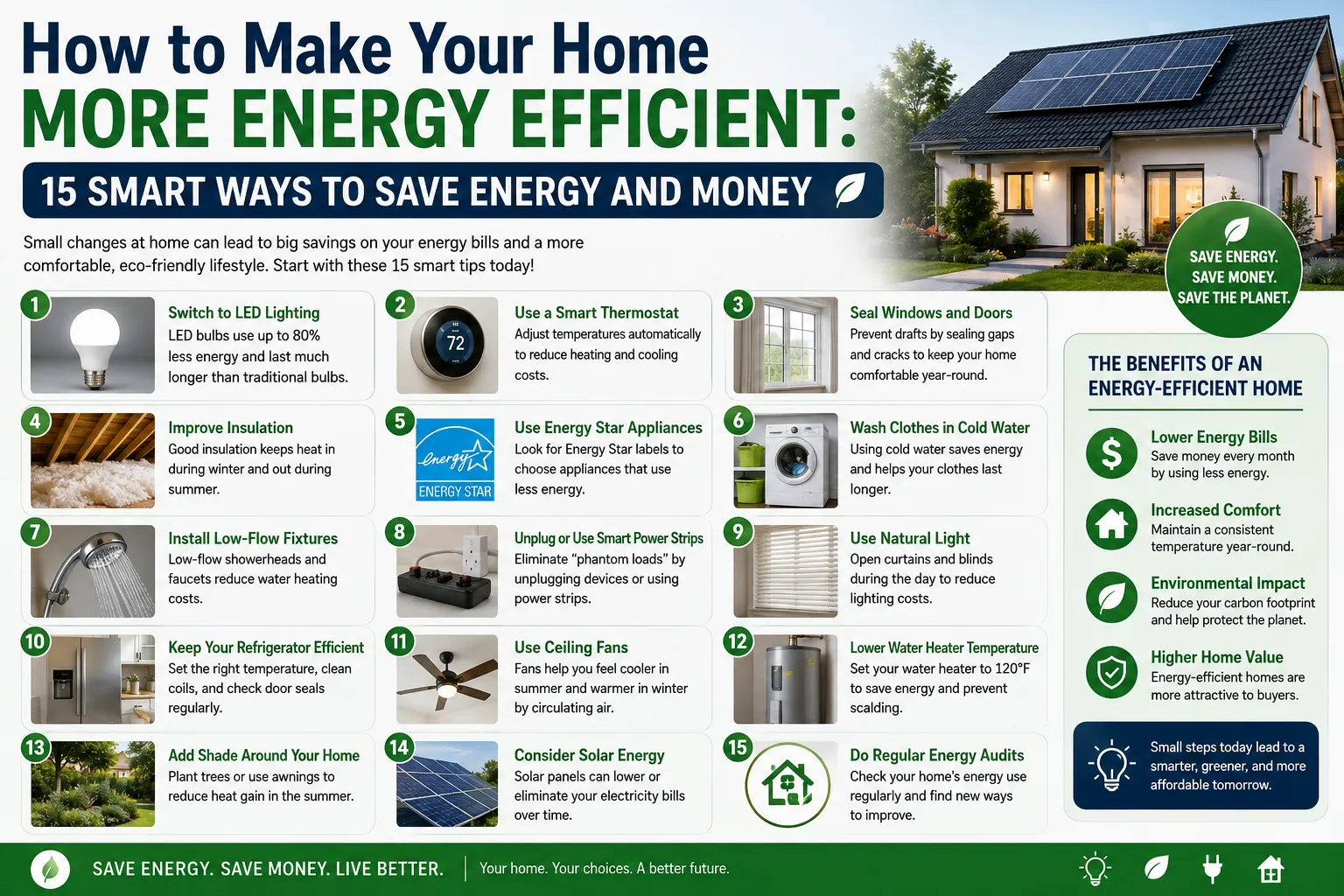
How to Make Your Home More Energy Efficient: 15 Smart Ways to Save Energy and Money
Why Home Energy Efficiency Matters
Learning how to make your home more energy efficient is about much more than lowering an electricity bill. A well-designed, properly insulated, efficiently heated and cooled home can be more comfortable, quieter, healthier, and less wasteful at the same time. Energy efficiency simply means getting the same useful result while consuming less energy, whether that means keeping a room comfortable, washing clothes, heating water, or lighting a kitchen. ENERGY STAR describes energy efficiency as one of the most cost-effective ways to eliminate energy waste, reduce energy costs, and lower pollution associated with energy use.
The good news is that you do not need to completely rebuild your house to make a meaningful difference. Some improvements are inexpensive and can be completed in an afternoon, while others, such as insulation, window replacement, heat pumps, or solar panels, require a larger investment. The smartest approach is to treat your house as one connected system instead of buying random energy-saving products. For example, improving insulation before replacing an oversized heating or cooling system can reduce the amount of work that equipment needs to do. If you’re serious about how to make your home more energy efficient, the goal should be to reduce energy waste first and then choose technology that fits the home’s actual needs.
The Biggest Sources of Household Energy Use
Heating and cooling deserve special attention because they can account for a very large share of household energy consumption. ENERGY STAR says that nearly half of the energy used in a typical home can go toward heating and cooling, making HVAC efficiency, maintenance, insulation, and temperature control particularly important. Water heating, appliances, lighting, electronics, and cooking can also contribute significantly to household energy demand.
Think of your home’s energy use like a leaking bucket. You can keep pouring more energy into it, but if heat escapes through poorly insulated walls, air leaks around doors, inefficient windows, or badly sealed ducts, some of that energy disappears before it provides any useful comfort. Fixing those leaks can often be more sensible than simply purchasing a bigger heating or cooling system. That is the foundation of how to make your home more energy efficient: identify where energy is being wasted, fix the biggest problems first, and then improve the equipment that remains.
1. Start With a Home Energy Audit
One of the smartest answers to how to make your home more energy efficient is to begin with an energy assessment instead of immediately buying equipment. A home energy audit or professional home performance assessment examines the building envelope and major energy-consuming systems to identify where energy is being lost. ENERGY STAR recommends taking a whole-house approach so homeowners can understand how different systems interact and prioritize improvements that offer the greatest comfort and savings.
An assessment may reveal problems you cannot see during everyday life. Perhaps your attic insulation is inadequate, your ducts are leaking, your windows allow excessive heat transfer, or your heating and cooling equipment is working harder than necessary. You might even discover that a relatively inexpensive air-sealing project could solve a comfort problem you previously assumed required a new HVAC system. This is why starting with information can save you money.
You can also perform a basic inspection yourself. Walk around the house and look for obvious drafts, damaged weatherstripping, gaps around windows and doors, rooms that are consistently hotter or colder than others, condensation around windows, and appliances that appear unusually old or inefficient. Check your electricity bills over different seasons and look for patterns. If consumption suddenly rises during summer or winter, heating and cooling may deserve your attention first.
A professional assessment becomes particularly useful before a major renovation. Instead of guessing which upgrade will deliver the greatest return, you can create a prioritized plan based on the home’s condition. ENERGY STAR’s Home Performance approach specifically emphasizes assessment, building-science recommendations, and selecting projects according to the home’s needs.
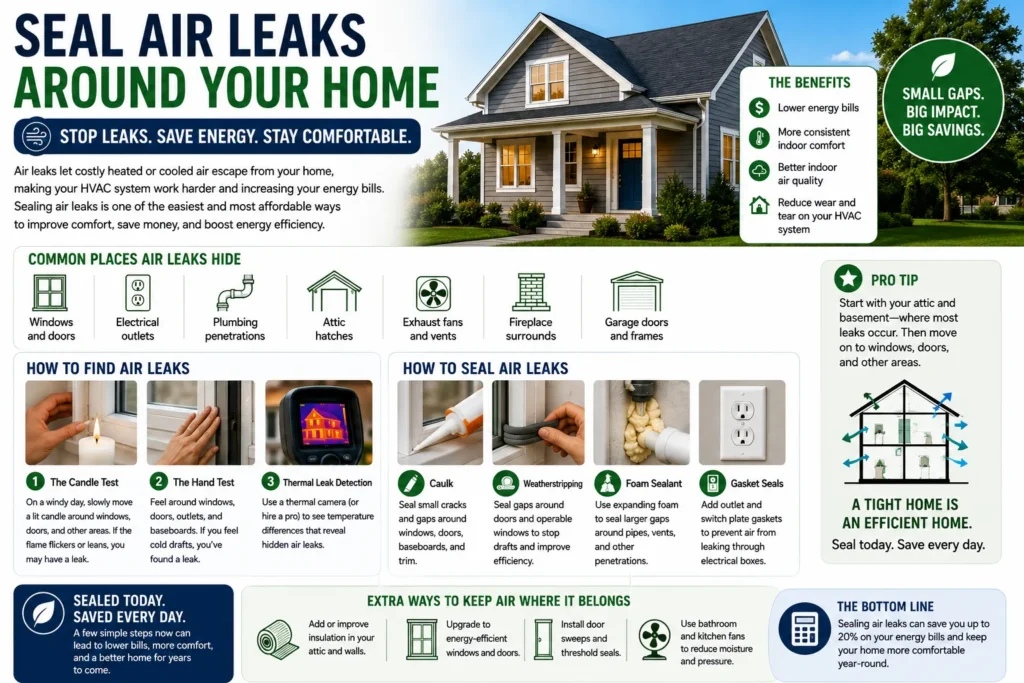
2. Seal Air Leaks Around Your Home
If you’re wondering how to make your home more energy efficient without spending a fortune, air sealing is one of the best places to investigate. Tiny gaps around windows, doors, electrical penetrations, plumbing openings, attic hatches, and other parts of the building envelope can allow conditioned air to escape. During hot weather, unwanted outdoor heat can enter; during cold weather, heated indoor air can escape. Your HVAC system then has to work harder to maintain the temperature you want.
Imagine paying to heat a room while leaving a window slightly open all day. That sounds wasteful, doesn’t it? Yet uncontrolled air leakage can create a similar problem without being obvious. ENERGY STAR identifies sealing and insulating as some of the most cost-effective ways to improve home comfort and energy efficiency.
Start with the easiest areas. Inspect weatherstripping around exterior doors and replace damaged material. Look at the seals around windows and check for visible gaps. Examine the attic hatch and basement or crawl-space areas if accessible. Caulk appropriate stationary gaps and use suitable expanding foam or other materials where appropriate, following safety guidance.
Do not assume that every draft should simply be sealed without consideration. Homes need appropriate ventilation, and combustion appliances can require specific safety measures. If you’re dealing with a complex building-envelope problem, combustion equipment, or significant moisture concerns, professional guidance is worthwhile.
3. Improve Your Home’s Insulation
Insulation is essentially your home’s thermal blanket. It slows the movement of heat between the indoor and outdoor environments, helping your heating and cooling system maintain a comfortable temperature with less effort. ENERGY STAR recommends sealing air leaks and adding insulation as critical steps in improving home energy performance.
If you are researching how to make your home more energy efficient, pay particular attention to the attic. Heat can move through an inadequately insulated attic, making the upper part of a house excessively hot during summer and allowing warmth to escape during winter. ENERGY STAR estimates that sealing and insulating an attic can save homeowners up to 10% on annual energy bills in some circumstances.
Why Attic Insulation Matters
The attic is often one of the most important areas to examine because it separates your living space from the outdoor environment. If insulation is thin, compressed, damaged, or missing in places, heat can move through the ceiling more easily. But insulation alone is not always enough. Air sealing should generally be addressed as part of the same improvement because insulation does not stop air movement through gaps.
Different homes require different insulation strategies depending on climate, construction, existing materials, moisture conditions, and local building practices. Simply adding insulation without addressing moisture or ventilation problems can create new issues. That is why professional assessment can be valuable, especially for older properties.
The same principle applies throughout the building. Walls, floors over unconditioned spaces, basements, crawl spaces, and other areas may need attention depending on the home’s construction. A properly insulated home is not only more efficient; it can also feel more comfortable because indoor temperatures are more consistent.
4. Upgrade Your Heating and Cooling System
If you want to know how to make your home more energy efficient, do not overlook the HVAC system. Heating and cooling can consume a significant portion of household energy, and inefficient or poorly maintained equipment can waste energy every time it operates. ENERGY STAR recommends regular maintenance, clean filters, properly sealed ducts, and efficient equipment as important parts of home energy management.
Start with maintenance before replacement. Check filters regularly and replace them when they become dirty. A clogged filter restricts airflow and can force the system to work harder. ENERGY STAR recommends checking filters monthly during heavy-use periods and changing them at least every three months, depending on conditions.
Ductwork is another hidden source of energy waste. Leaky ducts can allow conditioned air to escape into attics, crawl spaces, garages, or other areas where it provides no benefit. ENERGY STAR says sealing and insulating accessible ducts can improve heating and cooling efficiency by as much as 20% and sometimes more.
When replacement becomes necessary, consider high-efficiency equipment suited to your climate and home. Heat pumps are particularly interesting because they can provide heating and cooling by moving heat rather than generating it directly. ENERGY STAR identifies heat pumps as an efficient option for year-round home heating and cooling.
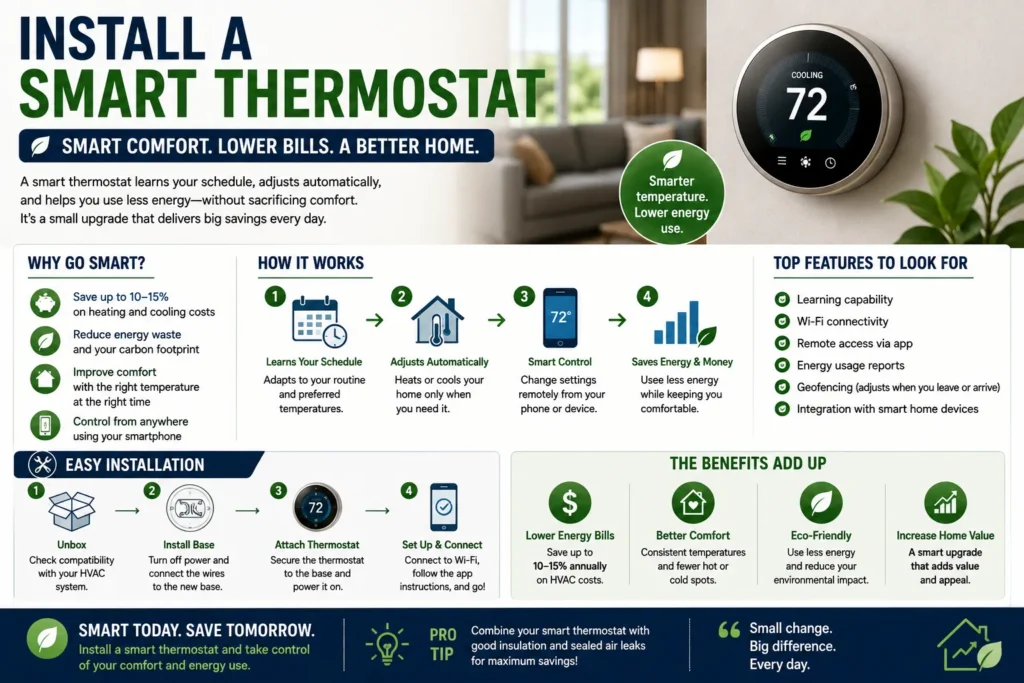
5. Install a Smart Thermostat
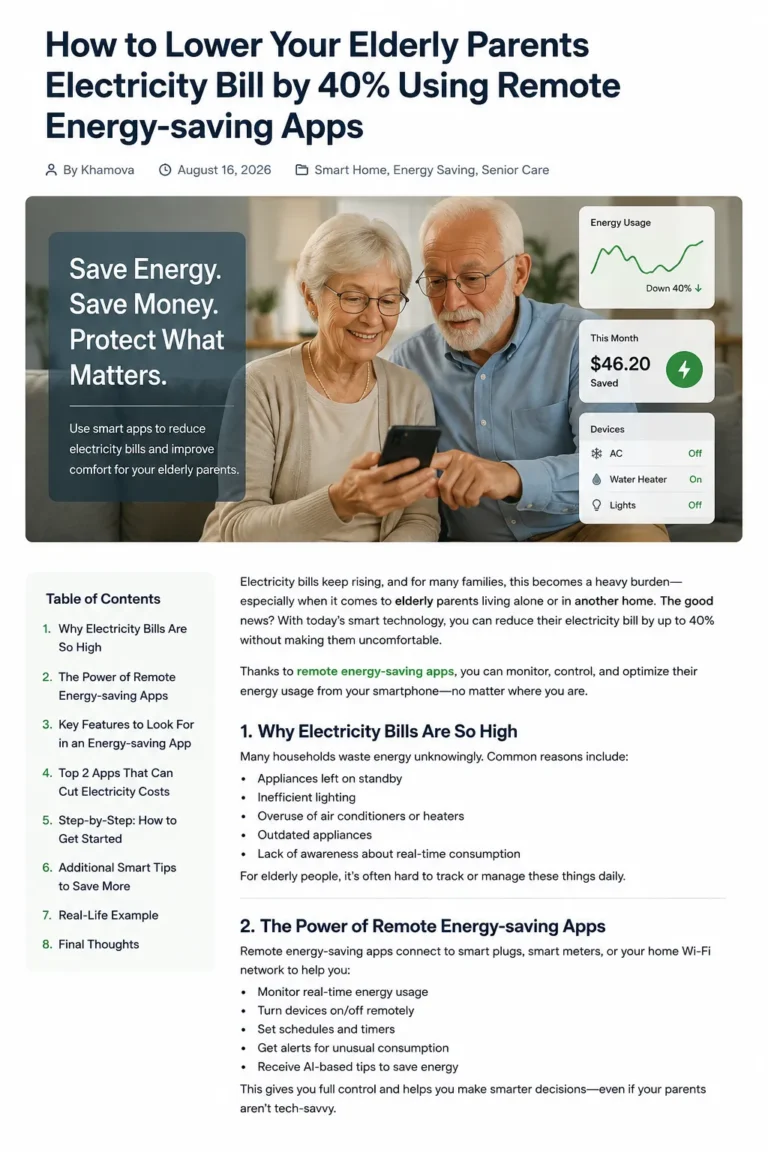
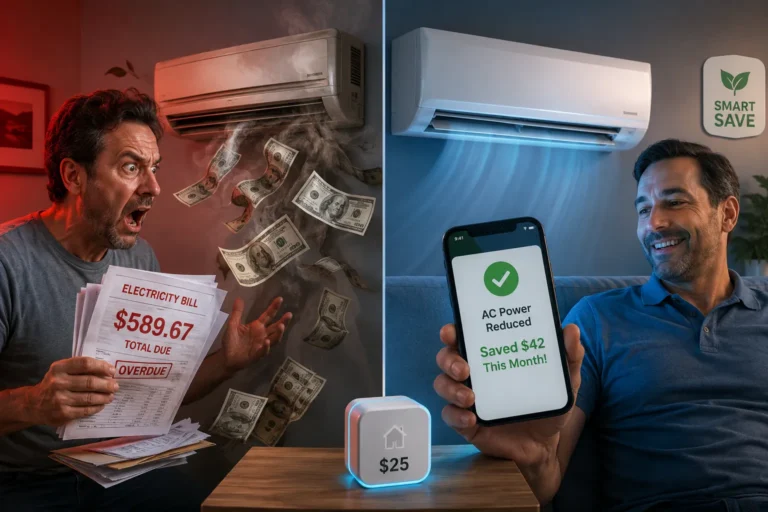
A smart thermostat can be a surprisingly useful tool when you’re learning how to make your home more energy efficient. Instead of heating or cooling your home according to a fixed schedule that may not match your actual routine, a smart thermostat can automate temperature adjustments. Many models allow you to manage settings from a smartphone and create schedules for sleeping, working, traveling, or returning home.
Why waste energy conditioning an empty house? If your home sits vacant for several hours every weekday, unnecessary heating or cooling during those hours can add up. ENERGY STAR says certified smart thermostats can reduce heating and cooling bills by more than 8% on average, with potential savings of around $50 annually, while homes that are unoccupied much of the day may save approximately $100 annually.
Of course, the thermostat is not magic. A smart thermostat cannot compensate for a badly insulated house or an inefficient HVAC system. It works best as part of a larger strategy involving insulation, air sealing, maintenance, and sensible temperature management.
Before buying one, make sure it is compatible with your heating and cooling equipment. Some HVAC systems require specific wiring or control configurations, so compatibility should be confirmed before installation.
6. Choose Energy-Efficient Windows
Windows influence both heat transfer and air leakage, which makes them important when considering how to make your home more energy efficient. Old or poorly sealed windows can allow unwanted heat to enter during summer and escape during winter. They can also create uncomfortable drafts that encourage homeowners to turn up heating or cooling.
However, window replacement can be expensive, so it is not always the first improvement you should make. If your windows are structurally sound, repairing damaged seals, improving weatherstripping, installing appropriate coverings, and addressing nearby air leaks may deliver useful benefits without the cost of complete replacement.
When replacement is necessary, look for products designed for your climate and building conditions. ENERGY STAR reports that replacing old, drafty windows with ENERGY STAR-certified windows can lower household energy bills by an average of 12%, although actual results vary by home and climate.
Window coverings can also help. During hot weather, shades or curtains can reduce unwanted solar heat entering the home. During cold weather, opening appropriate coverings during sunny periods can allow useful sunlight to warm interior spaces. These simple habits cost little and can complement more substantial efficiency improvements.
7. Switch to LED Lighting
Changing inefficient light bulbs is one of the easiest answers to how to make your home more energy efficient. LED lighting has become a standard efficiency upgrade because modern LED bulbs can deliver substantial energy savings while providing long operating lives. ENERGY STAR says certified LED bulbs use up to 90% less energy and can last up to 15 times longer than standard incandescent bulbs.
Start with the lights you use most often. There is no need to replace every bulb in your home at once if your budget is limited. Focus on kitchen lights, living-room fixtures, exterior lights, hallways, and other locations where lights remain on for long periods.
LED technology also gives homeowners more choices. You can find bulbs with different brightness levels, color temperatures, shapes, and smart-control features. Some smart bulbs can be scheduled to turn off automatically, reducing unnecessary usage.
The financial impact of a single bulb may be small, but homes often contain dozens of lights. ENERGY STAR estimates that replacing the five most frequently used fixtures or bulbs with certified efficient lighting can save around $40 per year in energy costs.
8. Upgrade Your Water Heater
Water heating is another major area to consider when learning how to make your home more energy efficient. Every shower, load of laundry, dishwasher cycle, and hot-water tap requires energy somewhere in the system. If your water heater is old or inefficient, you may be paying to heat water more than necessary.
ENERGY STAR identifies the water heater as the second-highest energy user in the home and highlights heat pump water heaters as a high-impact efficiency upgrade. According to ENERGY STAR, a certified heat pump water heater can use about 70% less energy than a standard electric water heater and could save a family of four more than $550 per year, depending on circumstances.
Why Heat Pump Water Heaters Are Worth Considering
Traditional electric water heaters use resistance heating to heat water directly. A heat pump water heater instead moves heat from surrounding air into the water, which can require considerably less electricity. This makes the technology particularly interesting for households looking to electrify their energy use while reducing consumption.
There are other ways to improve water-heating efficiency too. Insulating accessible hot-water pipes can reduce heat loss, while efficient showerheads and shorter showers can reduce both water and heating demand. Fixing leaking hot-water taps also prevents unnecessary energy and water consumption.
As with every major upgrade, climate, household size, available space, installation requirements, and local electricity prices matter. A product that works beautifully in one home may not be the best choice for another.
9. Use Energy-Efficient Appliances
Appliances are an important piece of the puzzle when considering how to make your home more energy efficient. Refrigerators, dishwashers, washing machines, dryers, cooking equipment, and other devices consume energy throughout the year. If an appliance is old and inefficient, replacing it at the right time can reduce operating costs.
But there is a trap here: replacing perfectly functional appliances simply because a newer model is slightly more efficient is not always the best financial decision. Consider the appliance’s age, expected remaining life, energy consumption, replacement cost, and available incentives.
When you do replace an appliance, compare efficiency ratings and estimated annual energy use rather than looking only at the purchase price. A cheaper appliance that consumes considerably more electricity can become more expensive over its lifetime.
ENERGY STAR notes that upgrading lighting, appliances, and water-heating equipment can represent a significant opportunity for savings, particularly because energy use in these areas can account for a substantial portion of utility costs.
10. Make Your Laundry More Efficient
Laundry is an easy place to reduce energy consumption without sacrificing cleanliness. Washing clothes with cold water whenever appropriate can dramatically reduce the energy associated with heating water. ENERGY STAR explains that hot water heating accounts for around 90% of the energy a washing machine uses to wash clothes, with only about 10% going toward the washer motor.
That makes cold-water washing one of the simplest recommendations for how to make your home more energy efficient. Modern detergents are designed to work effectively in cold water, although specific laundry requirements depend on the clothes, detergent, stains, and hygiene needs.
Try to wash full loads rather than repeatedly running partially filled machines. This reduces the number of cycles you need and can save both water and electricity. When drying clothes, avoid running the dryer longer than necessary.
If your dryer has a moisture sensor, use it. The sensor can stop the cycle when clothing is dry instead of continuing to heat clothes unnecessarily. Cleaning the lint filter before every load also helps maintain airflow and drying performance. ENERGY STAR notes that an extra 15 minutes of dryer operation per load can cost up to $34 annually in some circumstances.
11. Reduce Standby Electricity
Modern homes contain more electronic devices than ever. Televisions, game consoles, computers, monitors, routers, speakers, chargers, kitchen gadgets, and other electronics can consume electricity even when they appear to be doing nothing.
This is sometimes called standby or “vampire” energy. The amount used by one device may be small, but dozens of devices operating continuously can add up.
One easy strategy for how to make your home more energy efficient is to use power strips for groups of electronics. Instead of unplugging five devices individually, you can switch off one power strip when appropriate.
Be careful with equipment that needs to remain connected, such as medical devices, security systems, refrigerators, internet equipment, or other essential electronics. The goal is not to disconnect everything. It is to identify devices that can safely be switched off when they are not needed.
Computers can also be configured to enter sleep or low-power modes automatically. ENERGY STAR specifically recommends computer power-management settings as a simple efficiency measure.
12. Improve Kitchen Energy Efficiency
The kitchen may not be the first room you think about when researching how to make your home more energy efficient, but it contains several energy-intensive appliances. Refrigerators run continuously, ovens can consume substantial energy during use, dishwashers heat both water and air, and smaller appliances can remain plugged in around the clock.
Start with the refrigerator. Make sure the door seals properly and avoid leaving it open longer than necessary. Keep the appliance at appropriate temperature settings and allow sufficient airflow around it according to the manufacturer’s recommendations.
Dishwasher habits also matter. ENERGY STAR recommends scraping food from dishes rather than unnecessarily rinsing them before loading and running the dishwasher with a full load. Using an air-dry option, when available, can also reduce energy consumption.
Cooking efficiently can be surprisingly simple. Match cookware to the heating element, use lids when appropriate, avoid repeatedly opening the oven, and choose smaller appliances such as toaster ovens or microwaves when they are suitable for the task. These habits reduce unnecessary energy use without making cooking more difficult.
13. Use Solar Energy at Home
Once you have reduced energy waste, renewable energy can become the next step in how to make your home more energy efficient. Rooftop solar panels can generate electricity from sunlight and reduce the amount of electricity your home needs to draw from the grid, depending on system size, local rules, weather, and household consumption.
The key is timing. Installing solar on a highly inefficient home can mean purchasing a larger system to compensate for energy that could have been saved more cheaply through efficiency upgrades. ENERGY STAR’s home-improvement guidance similarly places energy-efficiency improvements before renewable-energy systems in the whole-house process.
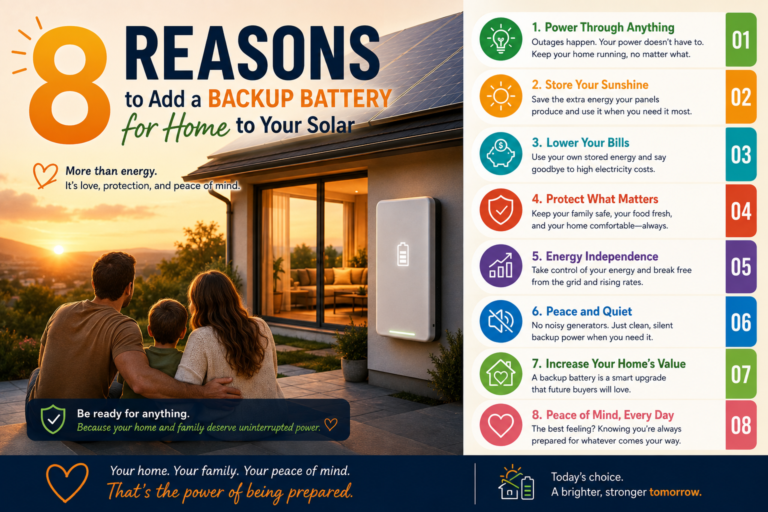
A solar system can also work alongside energy-efficient appliances, heat pumps, and batteries. For example, reducing household electricity consumption can allow a given solar array to cover a larger percentage of annual demand.
Solar is not right for every property. Roof orientation, shading, structural condition, local regulations, electricity prices, financing, and installation costs all matter. A professional solar assessment can help determine whether the economics make sense for your home.
14. Build Better Everyday Energy Habits
Technology gets most of the attention, but behavior remains an important part of how to make your home more energy efficient. You can have efficient appliances and still waste energy if you leave lights running unnecessarily, heat empty rooms, run half-full appliances repeatedly, or ignore maintenance.
Simple habits can make efficiency almost automatic. Turn off lights when rooms are empty, use natural daylight when practical, close doors between conditioned and unconditioned spaces, keep vents clear, and avoid setting heating or cooling systems to extreme temperatures.
Water habits matter too. Shorter showers reduce both water consumption and the energy required to heat that water. Fixing dripping hot-water taps prevents ongoing waste. Running dishwashers and washing machines only when sufficiently full reduces the number of cycles.
The goal is not to become obsessed with every watt of electricity. Good energy habits should eventually feel normal. Once they become part of your routine, you save energy without constantly thinking about saving energy.
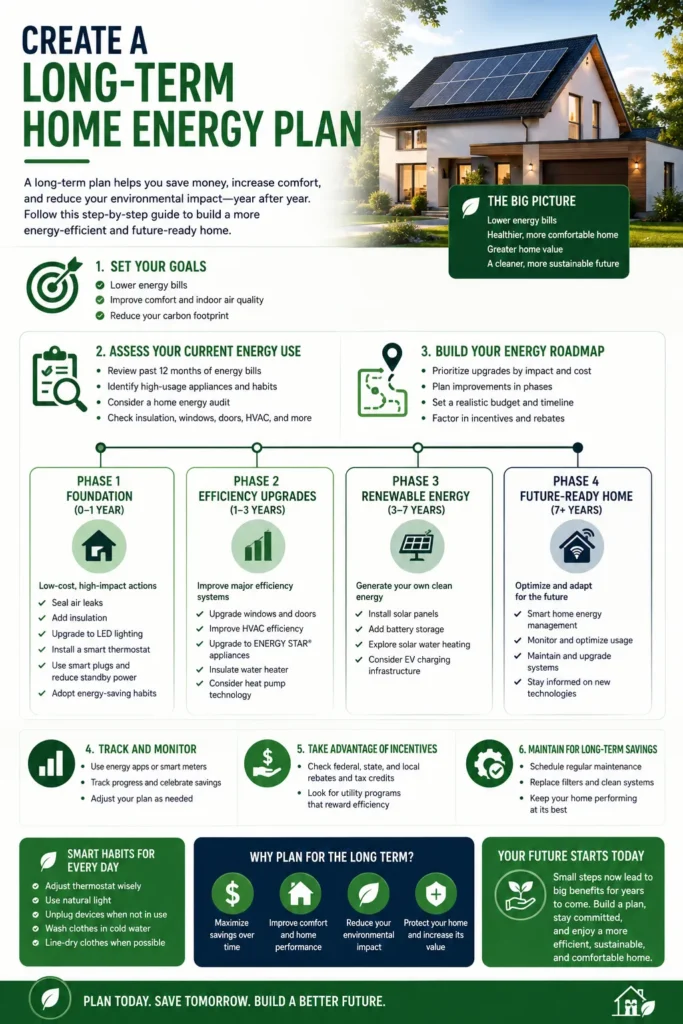
15. Create a Long-Term Home Energy Plan
If you really want to master how to make your home more energy efficient, stop thinking in terms of isolated purchases and create a long-term plan. You do not need to complete every upgrade this month. Instead, identify which projects are most important, estimate their costs, determine which ones you can do yourself, and establish a realistic timeline for larger improvements.
A useful sequence is to start with assessment, then air sealing and insulation, followed by HVAC optimization, water heating, efficient appliances, windows where necessary, and renewable energy where appropriate. This is broadly consistent with ENERGY STAR’s whole-house approach, which emphasizes understanding home performance before selecting improvements.
Think about the plan as a staircase. You do not need to jump from an inefficient house to a fully electrified, solar-powered smart home overnight. Each improvement can make the next one more effective.
For example, better insulation can reduce heating and cooling demand. A lower heating load may allow a smaller HVAC system. A more efficient home may require less solar generation to offset its electricity consumption. The projects can reinforce one another.
How Much Can an Energy-Efficient Home Save?
The savings from energy efficiency vary enormously because every house is different. Climate, house size, construction quality, electricity prices, occupancy, existing equipment, and household behavior all affect the result. A home that starts with poor insulation and old appliances may have much greater opportunities than a recently constructed efficient home.
That is why broad promises about saving a specific percentage should be treated carefully. ENERGY STAR provides examples of potential savings for individual improvements, but actual results depend on the property and how upgrades are installed and used. For instance, ENERGY STAR estimates that certified windows can reduce household energy bills by an average of 12% when replacing old, drafty windows, while attic sealing and insulation can save up to 10% annually in appropriate circumstances.
The most important financial principle is to look at lifetime cost, not just purchase price. An efficient appliance may cost more initially but consume less energy for years. A heat pump water heater may have a higher upfront cost than a basic electric water heater but substantially lower operating costs over time. ENERGY STAR gives an example in which an efficient heat pump water heater’s additional purchase cost can be offset by lifetime energy savings.
You should also check local rebates, tax credits, utility programs, and financing options before purchasing major equipment. Incentives change over time and vary by location, so verify current eligibility before making a financial decision.
Common Home Energy Efficiency Mistakes
One of the biggest mistakes people make when learning how to make your home more energy efficient is focusing on products rather than problems. A smart thermostat is useful, but it cannot fix missing insulation. Solar panels can generate clean electricity, but they do not stop heat escaping through a badly sealed attic. An efficient air conditioner can still perform poorly if its ducts leak or the system is incorrectly installed.
Another common mistake is ignoring maintenance. Even high-efficiency equipment needs appropriate servicing. Dirty filters, blocked airflow, damaged seals, poorly maintained equipment, and neglected ductwork can reduce performance.
Buying the most expensive product is not automatically the same as making the smartest efficiency investment. You need to consider your home’s climate, existing equipment, budget, usage patterns, and expected savings. A relatively inexpensive air-sealing project may provide more value than an expensive upgrade that addresses a smaller problem.
Finally, avoid trying to make every improvement simultaneously. A rushed renovation can create unnecessary expenses and make it difficult to understand which improvements actually delivered results. A measured, whole-house strategy is usually more practical.
Conclusion
Understanding how to make your home more energy efficient starts with a simple idea: stop wasting energy before trying to produce more of it. A home with good insulation, effective air sealing, efficient heating and cooling, smart temperature control, efficient appliances, and sensible daily habits can provide greater comfort while requiring less energy. ENERGY STAR consistently emphasizes a whole-house approach, with measures such as insulation, air sealing, efficient HVAC systems, water heating, windows, and smart controls forming the foundation of a more efficient home.
The best improvement will depend on your property. For one household, attic insulation may be the biggest opportunity. For another, an aging HVAC system or inefficient water heater may deserve priority. Someone else may benefit from efficient windows, while another homeowner may be ready to add rooftop solar after reducing household demand.
The important thing is to start somewhere. Get an energy assessment, identify the biggest sources of waste, tackle the highest-value improvements first, and gradually build toward a more efficient home. Once you understand how to make your home more energy efficient, energy savings stop being a collection of random tips and become a practical strategy for creating a more comfortable, affordable, and sustainable place to live.
Frequently Asked Questions
1. What is the easiest way to make your home more energy efficient?
Start by identifying energy waste. Sealing obvious air leaks, improving insulation, replacing frequently used incandescent bulbs with LEDs, maintaining HVAC equipment, and managing thermostat settings are practical starting points. ENERGY STAR recommends sealing and insulating as some of the most cost-effective home efficiency improvements.
2. Does insulation really make a difference?
Yes. Insulation slows heat transfer between your home and the outdoors, which can reduce the amount of work your heating and cooling system needs to do. Attic insulation is particularly important in many homes, and ENERGY STAR recommends combining insulation improvements with air sealing where appropriate.
3. Is a smart thermostat worth buying?
It can be, particularly if your home has significant heating or cooling costs or is regularly unoccupied. ENERGY STAR says certified smart thermostats can reduce heating and cooling bills by more than 8% on average, although actual savings vary.
4. Should I install solar panels before making my home energy efficient?
Generally, it makes sense to investigate efficiency improvements first. Reducing your home’s energy demand can potentially reduce the size of the solar system needed to meet your electricity needs. ENERGY STAR’s home-improvement guidance places efficiency upgrades before renewable-energy systems in its whole-house approach.
5. What uses the most energy in a typical home?
Heating and cooling are among the largest household energy uses. ENERGY STAR says nearly half of the energy used in a typical home can go toward heating and cooling, making HVAC maintenance, insulation, air sealing, and efficient temperature control especially important.ontinue to supply electricity to cities and industries, while rooftop solar, batteries, electric vehicles, heat pumps, and smart appliances will give consumers more control over energy use. The IEA expects renewable electricity capacity to expand by about 4,600 GW from 2025 through 2030, with solar PV driving most of the growth.
The most exciting development may not be any single technology but the way technologies work together. Solar can produce inexpensive daytime electricity, wind can generate power at different times, hydropower and batteries can provide flexibility, geothermal can provide steady output, and hydrogen can potentially support sectors where direct electrification is difficult. Digital systems can coordinate supply and demand in ways that were impossible decades ago.
For homeowners, this future makes how to make your home more energy efficient increasingly important. The efficient home of the future may use less energy because its insulation is better, consume electricity intelligently because of automated controls, generate power from solar panels, store energy in a battery or electric vehicle, and adjust consumption based on grid conditions. You do not have to implement all of these technologies today. The smart approach is to make practical improvements now while building a home that can adapt to new technologies later.
There is also an important economic dimension. Energy efficiency can reduce recurring household costs, while renewable energy can provide greater protection against certain electricity-price changes depending on local market conditions. Better insulation and efficient equipment can also improve comfort, not merely reduce consumption. That makes how to make your home more energy efficient a lifestyle improvement as much as an environmental decision.
Conclusion
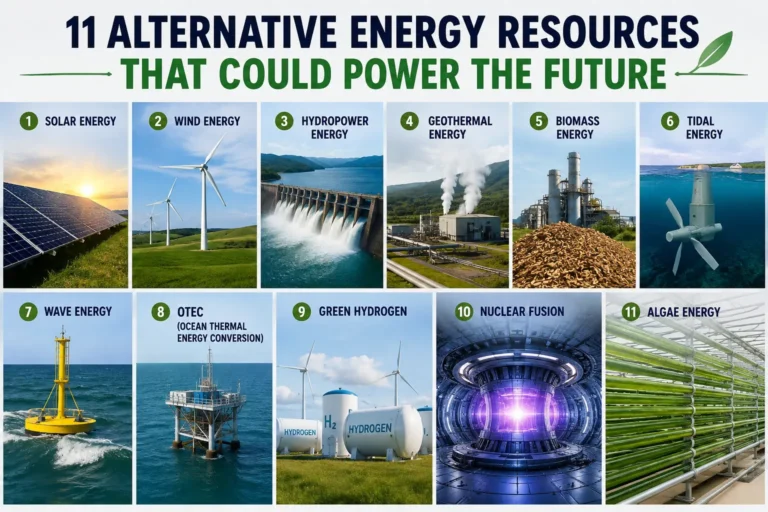
The future of energy will not be powered by one miraculous invention. It will be built from a portfolio of technologies that each solve different problems. Solar and wind are already expanding at extraordinary rates, hydropower provides valuable flexibility, geothermal offers consistent energy where resources are available, biomass and biogas can turn organic materials into useful energy, and emerging technologies such as ocean energy, green hydrogen, CSP, and algae-based fuels could open additional possibilities. Current IEA data shows just how quickly the transition is developing, with global renewable capacity additions reaching a record 800 GW in 2025.
For everyday homeowners, the transition does not have to begin with an expensive technology purchase. It can begin with understanding how to make your home more energy efficient. Reduce wasted energy, improve insulation, upgrade inefficient equipment, manage heating and cooling carefully, and then consider renewable generation such as rooftop solar. When you approach how to make your home more energy efficient as a complete strategy instead of a collection of random upgrades, you can make better decisions about comfort, costs, and renewable energy.
The bigger picture is encouraging. Renewable energy is expanding rapidly, technologies are becoming more sophisticated, and electricity systems are gaining new tools for managing variable generation. At the same time, households are becoming more capable of producing, storing, and controlling their own energy. Whether the future arrives through solar panels on rooftops, offshore wind farms, advanced geothermal systems, green hydrogen facilities, or technologies that are still being developed, one principle will remain important: the cleanest energy is often the energy you do not waste.
Frequently Asked Questions
1. What is the most promising alternative energy resource?
Solar energy currently stands out because of its rapid deployment, scalability, falling technology costs, and ability to work at both utility and household scales. The IEA reported that solar PV accounted for more than three-quarters of global renewable capacity additions in 2025. However, the most promising long-term energy system will likely combine several technologies rather than depend entirely on solar.
2. What is the easiest renewable energy system for a home?
For many homeowners, rooftop solar PV is one of the most practical renewable-energy options when the property has suitable sunlight, roof space, and local regulations. Before installing panels, it is smart to learn how to make your home more energy efficient so you can reduce electricity demand and potentially size the solar system more effectively. Efficiency upgrades can also improve comfort regardless of whether solar is installed.
3. How can I reduce my home’s energy consumption?
Start by learning how to make your home more energy efficient through insulation, air sealing, efficient lighting, efficient appliances, heating and cooling improvements, and better energy-management habits. An energy audit can help identify the biggest sources of waste. Once those problems are addressed, renewable technologies such as solar PV and batteries can be considered.
4. Will renewable energy completely replace fossil fuels?
Renewables are expected to become increasingly dominant in electricity generation, but the transition across the entire global energy system is more complicated because transportation, heavy industry, heating, and other sectors have different energy requirements. The IEA expects renewable electricity generation to continue expanding rapidly through 2030. Technologies such as batteries, hydrogen, grids, efficiency, and electrification will likely work alongside renewable generation.
5. Why is energy efficiency important if I have solar panels?
Solar panels generate electricity, but they do not eliminate energy waste. Understanding how to make your home more energy efficient can reduce the amount of electricity your household needs, potentially allowing a smaller solar system to cover a larger share of your consumption. Efficiency can also improve comfort, reduce operating costs, and make batteries or other energy technologies work more effectively.
For more informatin click here