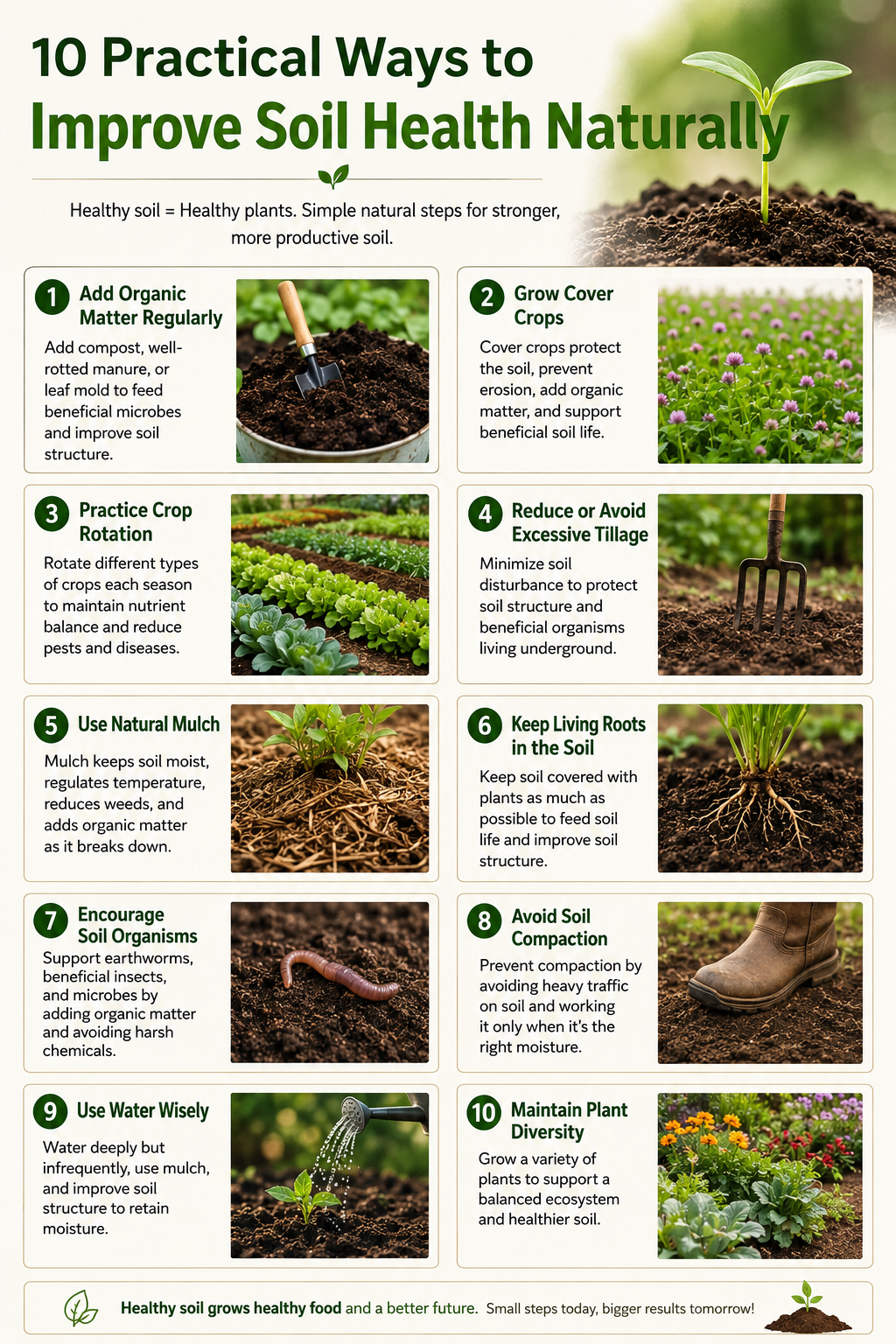
10 Practical Ways to Improve Soil Health Naturally
Healthy soil is the foundation of every successful garden and agricultural system. When soil is healthy, plants have better access to water, nutrients, oxygen, and beneficial microorganisms. However, years of intensive cultivation, erosion, excessive chemical use, and soil compaction can gradually reduce soil quality.
The good news is that improving soil health naturally does not require complicated methods. Simple practices such as adding compost, using mulch, planting cover crops, rotating crops, and reducing soil disturbance can make a significant difference over time.
In this guide, we will explore 10 practical ways to improve soil health naturally and explain how each method can help create stronger, more productive, and more sustainable soil.
What Is Soil Health?
Soil health describes the ability of soil to function as a living ecosystem that supports plants, animals, and the environment. Healthy soil is not simply soil that contains nutrients. It also needs good structure, biological activity, water movement, and organic matter.
Why Is Soil Health Important?
Good soil health affects almost every aspect of plant growth. Healthy soil can:
- Support strong root development
- Store and provide water
- Supply essential nutrients
- Support beneficial microorganisms
- Reduce erosion
- Improve drainage
- Help plants tolerate environmental stress
- Support long-term agricultural productivity
When soil becomes degraded, plants may struggle even when fertilizers are applied. This is why improving the overall condition of the soil is often more effective than focusing only on individual nutrients.
10 Practical Ways to Improve Soil Health Naturally
1. Add Organic Matter Regularly
Adding organic matter is one of the most effective ways to improve soil health naturally.
Organic matter includes compost, decomposed leaves, grass clippings, aged manure, plant residues, and other materials that come from living organisms.
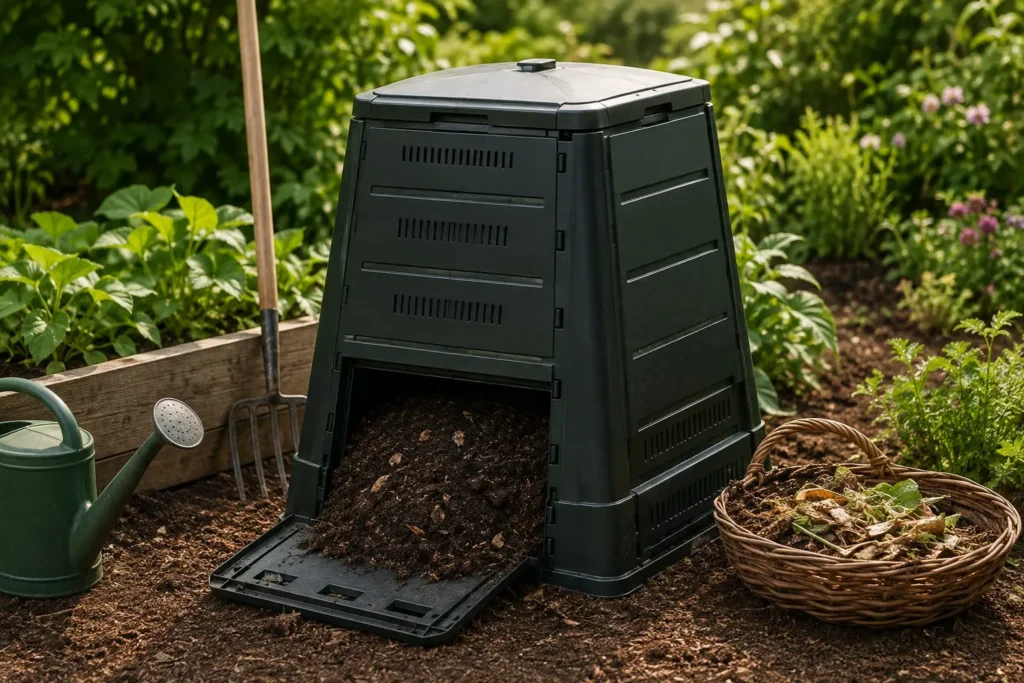
- Interested in this product? Check the link below for more details, or search for the product name directly on Amazon.
How Organic Matter Helps Soil
Organic matter can improve the physical structure of soil while providing food for microorganisms. It can also help sandy soil retain more moisture and help clay soil develop better drainage and structure.
As organic materials decompose, nutrients are gradually released into the soil. At the same time, microorganisms break down these materials and contribute to natural nutrient cycling.
Best Organic Materials to Use
Some useful materials include:
- Finished compost
- Aged manure
- Shredded leaves
- Grass clippings
- Plant residues
- Compost made from suitable kitchen waste
The key is consistency. Adding organic matter regularly can gradually improve soil health over several growing seasons.
2. Use Compost to Improve Soil
Compost is one of the easiest natural amendments available to gardeners.
It is produced when organic materials decompose under suitable conditions. Once finished, compost becomes a dark, crumbly material that can be added to garden beds and planting areas.
Benefits of Compost
Compost can contribute to soil health in several ways. It adds organic matter, supports microorganisms, improves soil structure, and can help the soil retain moisture.
It can also reduce household organic waste by turning materials such as leaves and vegetable scraps into a useful garden resource.
How to Apply Compost
Gardeners can spread a moderate amount of finished compost over the soil surface before planting. It can also be used around established plants as a surface amendment.
Avoid relying on compost alone. It works best when combined with other practices such as mulching, crop rotation, and maintaining living roots.
3. Keep the Soil Covered With Mulch
Leaving soil completely exposed can increase erosion, evaporation, and temperature fluctuations.
Organic mulch provides a protective layer between the soil and the environment.
Benefits of Organic Mulch
Common mulch materials include straw, shredded leaves, grass clippings, and wood chips.
Mulch can:
- Reduce water evaporation
- Protect against erosion
- Moderate soil temperature
- Reduce weed growth
- Add organic matter as it decomposes
- Provide habitat for soil organisms
These benefits make mulch a simple but powerful tool for maintaining soil health.
How Much Mulch Should You Use?
A moderate layer is usually sufficient. Avoid placing thick mulch directly against plant stems or tree trunks because excessive moisture around stems can create problems.
The objective is to protect the soil without completely blocking air movement or creating overly wet conditions.
4. Reduce Unnecessary Soil Disturbance
Traditional gardening often involves frequent digging and turning of soil. However, excessive disturbance can damage soil structure.
Healthy soil contains networks created by roots, fungi, earthworms, and microorganisms. Repeated tilling can disrupt these networks.
What Is Reduced-Till Gardening?
Reduced-till gardening means disturbing the soil only when necessary.
Instead of turning the entire garden every season, gardeners can:
- Add compost to the surface
- Use mulch
- Plant directly into existing soil when appropriate
- Avoid unnecessary digging
Why Does Less Disturbance Matter?
Reducing disturbance helps protect soil structure and biological activity. It also allows natural channels created by roots and organisms to remain intact.
Over time, reduced disturbance can become an important part of a sustainable soil health strategy.
5. Grow Cover Crops
Cover crops are plants grown primarily to protect and improve the soil rather than for direct harvest.
They are widely used in agriculture, but they can also be useful in home gardens.
How Cover Crops Improve Soil
Cover crops protect the soil surface from rainfall and wind. Their roots help hold soil particles together and contribute organic material below ground.
Some legumes can also contribute nitrogen through their natural relationships with soil bacteria.
Examples of Cover Crops
Depending on the climate and season, growers may use plants such as:
- Clover
- Peas
- Oats
- Rye
- Certain beans
- Other suitable grasses and legumes
Keeping living roots in the soil for more of the year can support microorganisms and contribute to better soil health.
6. Practice Crop Rotation
Growing the same crop repeatedly in the same location can encourage certain pests and diseases and may place repeated pressure on particular nutrients.
Crop rotation provides a simple natural solution.
How Crop Rotation Works
Instead of planting the same crop family in the same location every year, rotate different types of crops.
For example, a garden might rotate between legumes, leafy vegetables, root crops, and fruiting vegetables.
Why Crop Rotation Improves Soil Health
Different plants have different root systems and nutrient requirements. Rotating them can increase plant diversity and create a more balanced soil ecosystem.
Crop rotation can also reduce the continuous buildup of pests and diseases associated with particular crops.
For this reason, crop rotation is an important practice for maintaining long-term soil health.
7. Encourage Earthworms and Beneficial Microorganisms
Healthy soil is full of life.
Earthworms, bacteria, fungi, insects, and other organisms contribute to the natural processes that maintain soil structure and nutrient cycling.
Why Earthworms Matter
Earthworms create channels as they move through the soil. These channels can improve the movement of water and air.
Their activity also contributes to the decomposition and movement of organic materials.
How to Support Soil Organisms
Rather than trying to add organisms artificially, focus on creating conditions where they can naturally thrive.
Provide:
- Organic matter
- Suitable moisture
- Soil cover
- Living roots
- Minimal unnecessary disturbance
Avoiding unnecessary pesticide use can also help protect beneficial organisms.
A biologically active soil ecosystem is a major component of good soil health.
8. Prevent Soil Compaction
Compacted soil has fewer spaces between particles, making it more difficult for roots, air, and water to move through the soil.
What Causes Soil Compaction?
Common causes include:
- Heavy machinery
- Repeated foot traffic
- Vehicles
- Working soil when it is very wet
- Excessive cultivation
How to Prevent Compaction
In a home garden, create permanent paths between growing beds. This prevents repeated walking over areas where plants are growing.
Raised beds can also help protect soil from foot traffic.
In agricultural systems, reducing unnecessary machinery passes can help preserve soil structure.
Preventing compaction is much easier than repairing severely compacted soil, making it an important part of long-term soil health management.
9. Use Natural Fertilizers Wisely
Natural fertilizers can provide useful nutrients, but they should still be used carefully.
Examples include aged manure, compost-based fertilizers, and certain plant-based amendments.
Why More Fertilizer Is Not Always Better
Applying too much fertilizer can create nutrient imbalances. Excess nutrients may also move into waterways and contribute to environmental problems.
This is why fertilizer applications should be based on the actual needs of the soil and plants.
Test Your Soil Before Fertilizing
A basic soil test can provide useful information about pH and nutrient levels.
Testing allows gardeners to make informed decisions rather than applying nutrients simply because plants appear to need them.
Natural fertilizers can be useful, but they should support a broader soil health strategy that includes organic matter, plant diversity, and good soil management.
10. Test and Monitor Your Soil
The final step in improving soil health is learning to monitor the condition of your soil.
A soil test can provide information about important characteristics such as pH and nutrient availability.
What Should You Look For?
You can also observe the soil directly.
Ask yourself:
- Does water drain properly?
- Does water remain on the surface after rain?
- Is the soil hard or crumbly?
- Are earthworms present?
- Are plant roots developing well?
- Does the soil dry out very quickly?
These observations can provide valuable information about changes in soil condition.
Keep Track of Your Progress
Record what you add to the soil and which crops you grow. After several seasons, these records can help you understand which practices are producing the best results.
Remember that improving soil health is usually a gradual process. Consistent management is more effective than trying to change everything at once.
Additional Tips for Better Soil Health
Avoid Leaving Soil Bare
Bare soil is more vulnerable to erosion, evaporation, and temperature extremes. Use mulch or living plants to provide protection whenever possible.
Increase Plant Diversity
Different plants interact with soil in different ways. A diverse garden can support a more varied ecosystem above and below the ground.
Avoid Overwatering
Too much water can reduce oxygen availability and create unfavorable conditions for plant roots and microorganisms. Water according to the needs of your plants and soil.
Be Patient
Natural soil improvement takes time. Organic matter needs to decompose, microorganisms need to establish themselves, and soil structure changes gradually.
Common Mistakes That Can Damage Soil Health
Even gardeners who want to improve their soil can make mistakes.
Adding Too Much Compost
Compost is beneficial, but excessive applications can contribute to nutrient imbalances. Use it thoughtfully and consider testing the soil when necessary.
Tilling Too Frequently
Repeated tilling can damage soil structure and disturb biological communities.
Walking on Garden Beds
Repeated foot traffic can compact the soil and reduce the space available for air and water.
Using Fertilizer Without Testing
Adding nutrients without understanding existing nutrient levels can create unnecessary problems.
Expecting Immediate Results
Improving soil health is a long-term process. Some changes may become noticeable quickly, but major improvements often require several seasons of consistent management.
How to Create a Simple Soil Health Routine
You do not need to adopt every practice immediately.
Start With Organic Matter
Begin by adding finished compost and returning suitable plant materials to the soil.
Protect the Soil
Use mulch or cover crops to prevent the surface from remaining bare.
Reduce Disturbance
Avoid unnecessary digging and create permanent pathways to prevent compaction.
Increase Diversity
Rotate crops and include different types of plants in your growing system.
Monitor Results
Test the soil periodically and observe how plants respond.
This simple routine can gradually create better conditions for roots, microorganisms, and other soil organisms.
Conclusion
Improving soil health naturally is one of the best long-term investments a gardener or farmer can make. Healthy soil provides a strong foundation for plant growth while supporting water management, nutrient cycling, biodiversity, and environmental resilience.
The most effective approach is not to rely on a single product or technique. Instead, combine several natural practices: add organic matter, use compost, protect the soil with mulch, reduce unnecessary disturbance, grow cover crops, rotate crops, encourage beneficial organisms, prevent compaction, use fertilizers carefully, and monitor your soil regularly.
Most importantly, remember that soil health is a long-term process. Small improvements repeated consistently can eventually produce significant changes.
By taking care of the soil beneath your plants, you are not only improving this year’s garden. You are building a healthier growing environment that can continue to support plants and ecosystems for many years to come.
For more information click here