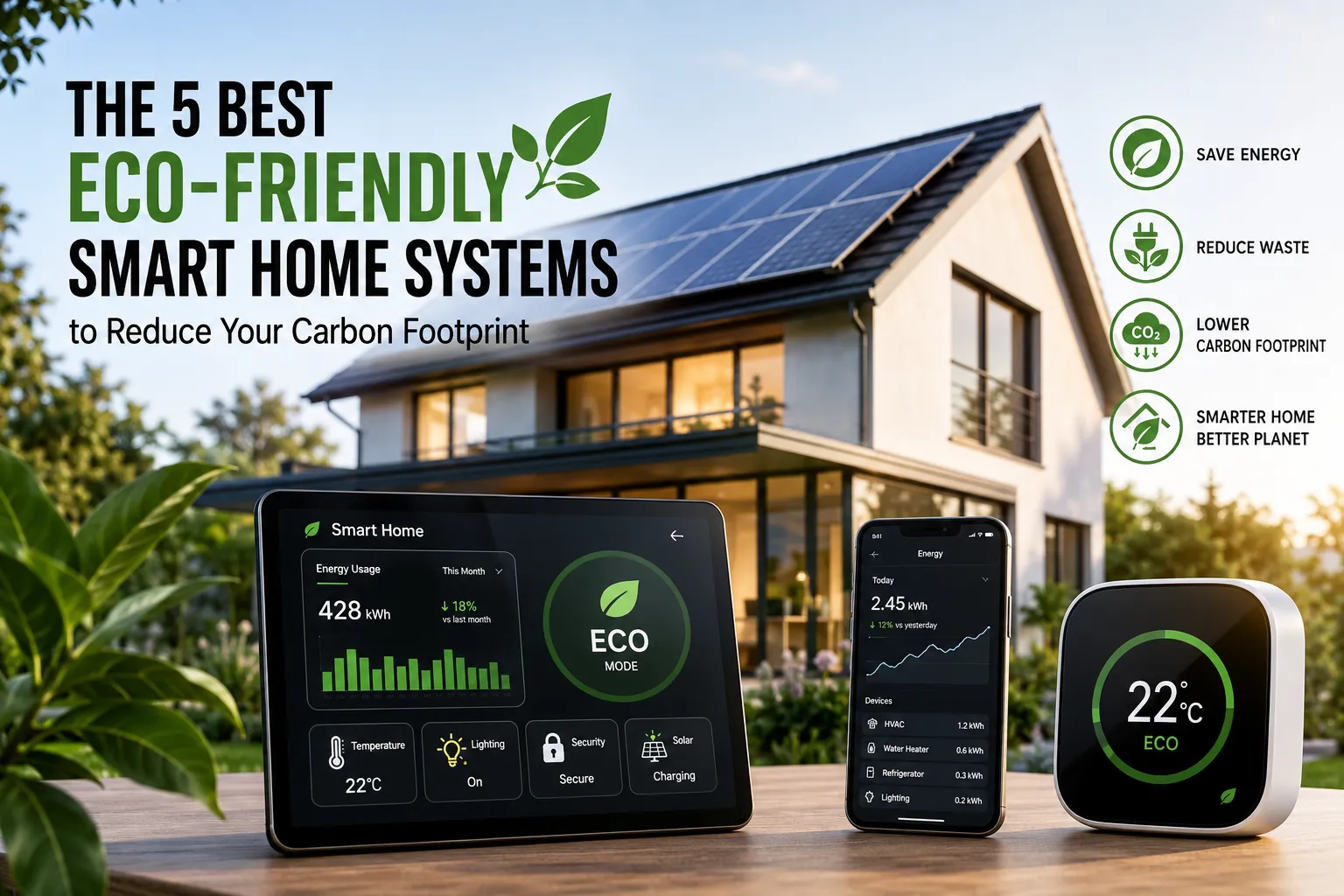
The 5 Best Eco-Friendly Smart Home Systems to Reduce Your Carbon Footprint
Why Eco-Friendly Smart Home Systems Matter
An eco-friendly smart home system is more than a collection of connected gadgets that you control from your phone. When the technology is selected carefully, it can help your home use electricity, heating, cooling, and lighting more intelligently. That matters because energy waste often happens quietly: an air conditioner keeps running after everyone leaves, lights stay switched on in empty rooms, appliances consume electricity while sitting idle, and heating or cooling systems operate according to a fixed schedule rather than actual household needs. The goal of eco-friendly smart home systems is to make those everyday decisions more efficient through automation, monitoring, and better control. ENERGY STAR describes smart home energy-management systems as solutions that can schedule devices, suggest energy-saving actions, and automatically respond to occupancy.
Think of an eco-friendly smart home system as a digital assistant for your house. Instead of simply telling you how much electricity you consumed at the end of the month, a good system can help you understand where that electricity went and when unnecessary consumption happened. That information can change behavior because it turns an invisible problem into something you can actually see. You might discover that cooling is responsible for a large portion of your usage, or that a particular appliance is running far more often than expected. Once you know where the waste is coming from, you can automate or modify that part of your home rather than buying random smart products that may have little environmental impact.
The best eco-friendly smart home systems therefore focus on measurable efficiency rather than novelty. A smart speaker can be convenient, but convenience alone does not necessarily reduce your carbon footprint. A smart thermostat, energy monitor, occupancy sensor, smart lighting system, or solar-management system can have a much more direct relationship with energy consumption. The most effective approach is to combine several technologies so that your home becomes a coordinated system instead of a collection of unrelated devices.
What Makes a Smart Home System Eco-Friendly?
Not every smart home product deserves to be called an eco-friendly smart home system. Connecting a device to Wi-Fi does not automatically make it sustainable. The environmental value comes from what the technology helps you accomplish after installation. A useful system should reduce unnecessary energy consumption, make renewable energy easier to use, or provide information that allows you to make more efficient decisions. Ideally, it should also operate automatically so that energy savings do not depend entirely on remembering to press a button every day.
A strong eco-friendly smart home system normally combines three important capabilities: measurement, automation, and optimization. Measurement tells you what is happening. Automation allows the home to respond without constant human intervention. Optimization helps you choose better schedules, temperatures, lighting levels, and operating patterns. ENERGY STAR’s Smart Home Energy Management Systems program, for example, combines smart thermostats with lighting and plug-load controls and can also incorporate products such as appliances and EV chargers.
Another important consideration is compatibility. Your smart thermostat should work with your heating or cooling equipment, while smart plugs and lighting should work with the ecosystem you intend to use. If every product requires a separate application and cannot communicate with anything else, the system can become frustrating rather than useful. Look for products that support common smart-home platforms and provide clear energy-related features. The objective is simple: create an eco-friendly smart home system that makes energy efficiency easier, not another complicated project you have to manage.
1. Smart Thermostat and HVAC Systems
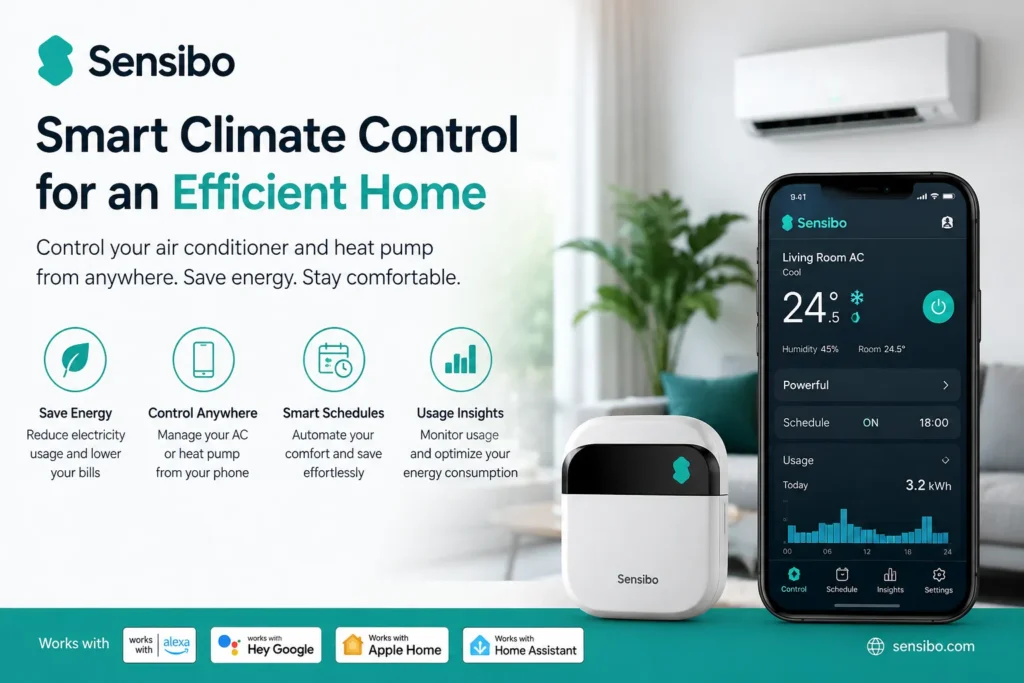
- Sensibo is a smart climate-control solution that can help you manage compatible air conditioners and heat pumps from your phone. It supports features such as scheduling and remote control, making it a practical option for homeowners looking to improve comfort while using energy more efficiently.
- Check out Sensibo Smart Climate Control
For many households, heating and cooling deserve to be the first place to look when building an eco-friendly smart home system. HVAC equipment can consume substantial amounts of energy, especially when it operates for long periods. A smart thermostat can automatically adjust temperature settings according to schedules, occupancy, and sometimes location. Instead of keeping your home at the same temperature all day simply because that is how a traditional thermostat works, the system can reduce heating or cooling when the house is empty and restore comfort when people return.
ENERGY STAR explains that certified smart thermostats can learn temperature preferences, create schedules, support remote control, and use features such as geofencing. The organization also says that heating and cooling represent almost half of the annual energy bill for the average American household. That makes intelligent climate control one of the most practical starting points for an eco-friendly smart home system, particularly in homes where air conditioning or heating operates frequently.
Why Smart Climate Control Can Save Energy
The real advantage of smart climate control is not that the thermostat itself uses less electricity. Its value comes from controlling equipment that can consume considerably more energy. Imagine leaving your house for eight hours while the air conditioner continues maintaining the exact same temperature. A smart thermostat can recognize the absence and adjust the setting, reducing unnecessary operation. The same principle works overnight, when you may prefer different indoor temperatures than during the day.
A smart HVAC system becomes even more useful when combined with room sensors and automation. Instead of treating every room as equally important, the system can prioritize occupied spaces. This creates a more targeted form of energy management. For homeowners interested in eco-friendly smart home systems, smart climate control is often one of the easiest upgrades to understand because the connection between automation and energy consumption is direct.
2. Smart Lighting Systems
Lighting is another area where eco-friendly smart home systems can reduce unnecessary electricity use. Traditional lighting requires people to remember when to switch lights on and off. That sounds simple until you consider how frequently lights remain on in empty rooms, hallways, bathrooms, garages, and outdoor areas. Smart lighting can combine schedules, motion sensors, daylight detection, and remote control to reduce this waste.
A smart lighting system can be programmed to turn lights off automatically when a room becomes empty. It can also reduce brightness when full illumination is unnecessary. For example, a hallway does not always need maximum brightness throughout the night. A smart system can provide lower-level lighting during certain hours while still maintaining visibility. These small adjustments can become meaningful when they occur every day across multiple rooms.
The environmental advantage becomes stronger when smart lighting is combined with efficient LED bulbs. The bulb provides the basic efficiency, while the smart controls make sure it operates only when needed. This is a recurring theme with eco-friendly smart home systems: the technology works best when automation is used to eliminate waste rather than simply adding another connected device.
Automated Lighting for Lower Electricity Use
One of the easiest strategies is to create lighting schedules based on normal household routines. Outdoor lights can switch on around sunset and turn off at a predetermined time. Bedroom lights can gradually dim before bedtime. Motion sensors can control utility rooms, bathrooms, closets, and corridors. Remote control also means you can check whether lights were accidentally left on after leaving home.
The best eco-friendly smart home systems do not require constant attention. Once the lighting rules are configured, the system quietly performs them in the background. That is important because sustainable habits are easier to maintain when technology removes the need for repeated manual decisions.
3. Smart Energy Monitoring Systems
- Sense for Home Energy Insights
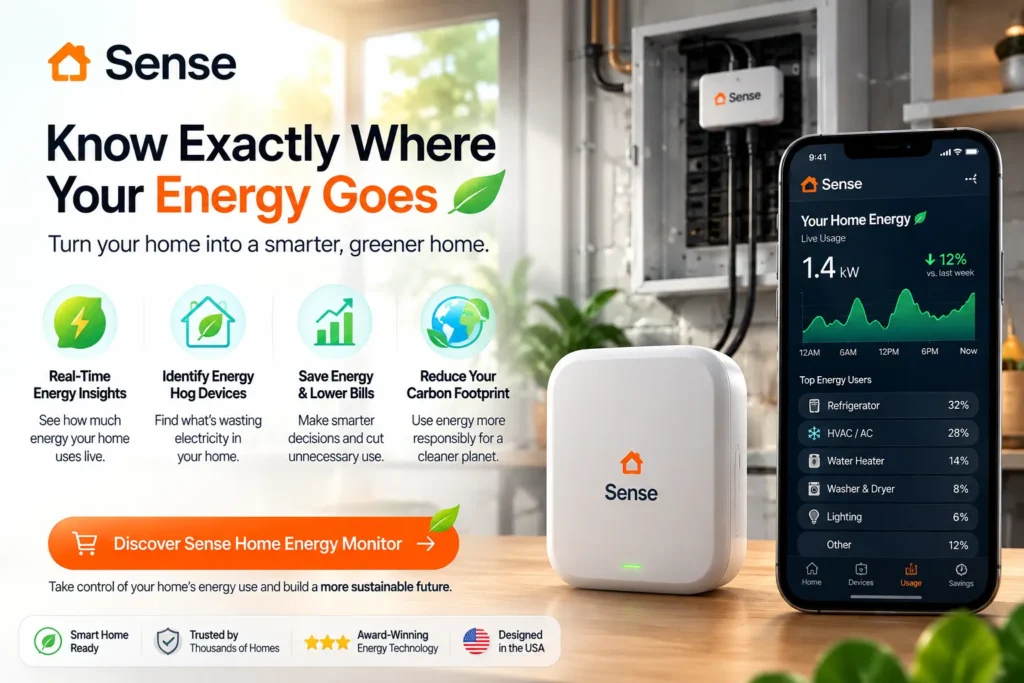
- Sense helps homeowners understand how electricity is being used throughout their homes. Its software provides energy insights and can help identify major energy-consuming devices, making it easier to spot waste and make smarter decisions about energy use. For anyone looking to build an eco-friendly smart home system, Sense can be a useful option for monitoring and understanding household energy consumption.
- Interested in this product? Check the link below for more details, or search for the product name directly on Amazon.
You cannot effectively reduce energy waste if you have no idea where the energy is going. This is why energy monitoring deserves a place among the best eco-friendly smart home systems. A smart energy monitor can provide information about electricity consumption and, depending on the system, identify individual devices or patterns that contribute to your usage.
Sense is a good example of this approach. Its software provides real-time information about home energy consumption and can identify individual devices by analyzing their electrical signatures. The company says its technology uses machine learning to provide insights into whole-home and device-level electricity use.
Understanding Your Home’s Biggest Energy Consumers
Imagine receiving an electricity bill that says you consumed 900 kWh. The number tells you how much electricity you used, but it does not necessarily tell you why. An energy-monitoring system can turn that single number into a more useful picture. You may discover that cooling equipment is responsible for a large share of consumption, or that a particular appliance is running longer than expected.
That information makes an eco-friendly smart home system more intelligent because decisions can be based on actual behavior rather than assumptions. Instead of replacing five appliances unnecessarily, you can identify the biggest energy problem first. This can save money and prevent unnecessary purchases.
Sense currently focuses heavily on software and smart-meter integration. The company announced that it stopped selling its standalone home energy monitors after December 31, 2025, shifting toward software integrated with next-generation smart meters and continuing support for existing monitor customers. This is an important example of how the smart-home market is evolving from standalone hardware toward connected energy intelligence.
4. Smart Plugs and Energy Management
Smart plugs are among the simplest components of an eco-friendly smart home system. They allow you to control compatible appliances remotely and create schedules for devices that do not need to operate continuously. This can be particularly useful for entertainment systems, desk equipment, lamps, chargers, and other electronics.
The key advantage is automation. You might decide that a particular group of devices does not need to remain powered overnight. Instead of remembering to unplug everything before bed, a smart plug can switch those devices off according to a schedule. Some smart plugs can also provide energy-use information, helping you identify equipment that consumes more electricity than expected.
Smart plugs should not be treated as magic energy-saving devices, though. If a device already consumes almost no electricity when idle, the savings from controlling it may be small. The best strategy is to use smart plugs where they can eliminate meaningful waste. That approach keeps your eco-friendly smart home system focused on measurable results.
Eliminating Standby Power Waste
Standby consumption can accumulate across a house because many electronic devices remain connected even when they appear inactive. A single device may not make a dramatic difference, but multiple electronics operating around the clock can create unnecessary consumption. Smart plugs provide a practical way to establish automatic shutdown routines.
For example, a home office could have a smart plug schedule that disconnects nonessential equipment after working hours. A media center could switch off overnight. Decorative lighting could follow a fixed schedule. When these routines are combined with energy-efficient appliances and sensible behavior, smart plugs become a useful building block in an eco-friendly smart home system.
5. Solar-Connected Smart Home Systems
Solar power can take an eco-friendly smart home system to another level by allowing part of the home’s electricity demand to be supplied by renewable energy. Solar panels generate electricity during daylight hours, but household demand does not always match solar production. Smart energy management can help coordinate flexible loads with periods when solar generation is strongest.
For example, if a home has solar panels and a compatible smart system, certain flexible appliances may be scheduled to operate during periods of high solar production. This can include charging an EV, running a washing machine, or using other controllable equipment. The precise capabilities depend on the solar inverter, battery, utility arrangement, and smart-home ecosystem.
Combining Renewable Energy With Home Automation
The real potential appears when solar, batteries, smart appliances, and energy monitoring work together. Instead of simply generating electricity, the home becomes capable of deciding when energy should be consumed, stored, or exported according to available technology and local rules. This makes renewable energy more useful because consumption can be aligned more closely with production.
An eco-friendly smart home system connected to solar can also provide better visibility. Homeowners can see how much energy their solar installation generates and compare that with household consumption. Over time, this information can help them understand their energy patterns and identify opportunities for further efficiency.
Two Smart Energy Products Worth Considering
If you are building an eco-friendly smart home system and want specific examples to research, two interesting options are Sensibo and Sense. They address different parts of energy management, which makes them useful examples for explaining how smart technology can reduce waste.
Sensibo for Smart Climate Control
Sensibo focuses on smart climate management, including products designed to control compatible air conditioners and heat pumps. Its systems can connect climate equipment to an app and support integrations with major smart-home platforms. Sensibo says its products are designed to improve energy efficiency and reduce CO2 emissions, making the brand particularly relevant to an article about eco-friendly smart home systems.
For an affiliate-focused blog, Sensibo is especially interesting because the company has an official affiliate program. Sensibo currently advertises a 25% commission on referred sales and a 60-day cookie window, although affiliate terms can change and should always be checked before publishing specific claims.
Where to mention it: Place Sensibo in the smart thermostat/HVAC section, immediately after explaining how intelligent climate control can reduce unnecessary heating and cooling.
Sense for Home Energy Insights
Sense approaches the problem from the measurement side. Its app can show real-time energy use and provide information about devices and consumption patterns. The company says its software can help users identify energy waste, understand appliance consumption, and make more informed energy decisions.
Sense is particularly useful as an example because it demonstrates an important principle: an eco-friendly smart home system does not always need to control every device directly. Sometimes the first step is simply understanding what is happening. Once you know where energy is being wasted, you can decide which automation, appliance upgrade, or behavioral change makes the most sense.
Where to mention it: Add Sense in the smart energy monitoring section after explaining why homeowners should understand which appliances consume the most electricity.
How to Choose the Best Eco-Friendly Smart Home System
Choosing between different eco-friendly smart home systems should begin with your home’s biggest energy problem. If your air conditioner operates for many hours, climate control may provide the greatest opportunity. If lights and electronics are frequently left on, smart lighting and smart plugs may be more appropriate. If you have no idea where your electricity is going, an energy monitor can provide the information you need before making other investments.
Compatibility should be your second consideration. Check whether the product works with your existing HVAC equipment, electrical setup, smart-home platform, and mobile devices. A product that looks excellent on paper may be a poor choice if it cannot communicate with the equipment you already own. Installation requirements also matter, especially for thermostats and electrical-panel equipment.
Cost is another factor. The cheapest smart device is not necessarily the most sustainable choice, while the most expensive system may provide features you never use. Look at the expected benefit over several years rather than focusing only on the initial purchase price. A device that reduces energy waste consistently can potentially provide more value than a collection of inexpensive gadgets that offer convenience without meaningful efficiency improvements.
Start With Your Biggest Source of Energy Waste
The most effective eco-friendly smart home systems begin with a problem rather than a shopping list. Start by asking what consumes the most energy in your home. Is it heating? Cooling? Water heating? Lighting? Appliances? Electronics? Once you identify the biggest opportunity, choose technology that directly addresses it.
This approach prevents a common mistake: buying smart products simply because they are popular. Sustainability is not about having the largest number of connected devices. It is about using technology strategically to achieve lower energy consumption and better resource management.
How to Build an Eco-Friendly Smart Home Step by Step
Building an eco-friendly smart home system does not require replacing everything at once. In fact, a gradual approach can be more practical and financially sensible. Begin with one high-impact area, measure the results, and then expand the system when you understand what works.
Start with an energy audit or monitoring solution if possible. Look at your electricity bills and identify seasonal patterns. Pay particular attention to periods when consumption rises sharply. Once you know what is happening, select one technology that addresses the largest source of waste.
Next, automate the simplest behaviors. Smart lighting schedules, occupancy-based controls, and smart plugs can reduce unnecessary operation without requiring major renovations. After that, consider more advanced technologies such as smart HVAC controls, solar integration, batteries, or EV charging management.
Finally, review your results regularly. A smart home should become more efficient over time rather than simply becoming more complicated. If a device is not providing useful energy savings or meaningful information, reconsider whether it belongs in your system. The strongest eco-friendly smart home systems are designed around outcomes, not gadgets.
Conclusion
The best eco-friendly smart home systems are not defined by how many devices you install. They are defined by how effectively those devices help you reduce waste, understand energy consumption, automate inefficient habits, and make better use of renewable energy. Smart thermostats can improve heating and cooling control, smart lighting can prevent unnecessary illumination, energy monitors can reveal hidden consumption, smart plugs can automate shutdown routines, and solar-connected systems can coordinate renewable generation with household demand.
The most important step is to start with the biggest source of energy waste in your home. If climate control is the problem, look at smart HVAC technology such as Sensibo. If you need better visibility into electricity consumption, energy-intelligence software such as Sense can be worth researching, depending on smart-meter availability and your location. By combining the right technologies instead of buying connected gadgets at random, you can create an eco-friendly smart home system that is more efficient, more comfortable, and potentially less expensive to operate.
A smarter home should not simply make life more convenient. It should help you use resources more responsibly. When automation, energy data, efficient equipment, and renewable energy work together, your home can become an active part of your effort to reduce your carbon footprint.
Frequently Asked Questions
1. What is an eco-friendly smart home system?
An eco-friendly smart home system combines connected devices, automation, and energy-management technology to reduce unnecessary resource consumption. Examples include smart thermostats, energy monitors, smart lighting, smart plugs, and solar-connected controls. The objective is not simply to connect devices to the internet but to use technology to improve efficiency.
2. Which smart home device can save the most energy?
There is no single device that saves the same amount of energy in every home. Heating and cooling can be major energy consumers, so smart climate control can be particularly valuable in homes with heavy HVAC use. ENERGY STAR recommends certified smart thermostats because they can automate temperature settings and provide features designed to support energy savings.
3. Is Sensibo a good option for an eco-friendly smart home?
Sensibo is worth considering if you want smarter control of compatible air conditioners or heat pumps. Its products focus on climate management, energy efficiency, and remote control, and the company offers an affiliate program for publishers and content creators.
4. Can an energy monitor really help reduce a home’s carbon footprint?
An energy monitor can help because it gives you information about where electricity is being consumed. Once you identify high-energy devices or inefficient patterns, you can change schedules, reduce usage, replace inefficient equipment, or introduce automation. Sense, for example, provides real-time energy insights and device-level information through its software.
5. Should I build my entire smart home at once?
No. A gradual approach is often better. Start with the area where you have the greatest potential for energy savings, measure the results, and then expand. Building an eco-friendly smart home system around actual energy problems usually produces better results than buying many connected products simply because they are smart.
Ready to make your home more energy-efficient? Explore smart climate and energy-management solutions that can help you reduce waste and lower your home’s environmental impact.
- Affiliate Disclosure: This article contains affiliate links. If you purchase through these links, we may earn a commission at no extra cost to you.
- For more information click here